Monday, June 08, 2020

on the road to colima


A reader on the Facebook edition of Mexpatriate wrote this morning that she is feeling very dispirited.

On a walk back from the bank this morning, she noted that no one was wearing a mask in the businesses or on the street. That concerned her because, as the villages here are once again providing work for the residents, precautions are not being taken to maintain social distancing.

I concur with her observations. Other than the fact that people are not legally allowed to enter the ocean to swim or to fish from the shore, there is little evidence here that there is a COVID-19 infection on the loose. Masks are unworn. People are gathering in large groups (there was a children's birthday party across the street from my house last night, and an even larger adult party just around the corner.) In other words, people are getting on with their lives.

Mexico is probably at the height of its COVID-19 infection curve. At least, for new cases. The numbers go up and down, but the trend is up -- keeping in mind there is no general testing for the virus in Mexico. These numbers are based on survey extrapolations.


Even though, deaths seem to have started a downward curve.
  
Best practices would suggest that I stick around the house as much as possible. But circumstances do not always lend themselves to practicality.

As you can probably guess, there is a parable to accompany that bit of folk wisdom -- a parable that sums up the dilemma Mexican families are facing in this round of infections.

Omar informed me last week that a family member was going to a hospital in Colima. As is the practice in Mexico, family members needed to accompany her for her hospital stay. Between the two of us we made that happen. They rode the bus to Colima.

On Saturday he asked if I could drive to Colima to pick them up. I couldn't. I was in charge of facilitating our church service. So, we agreed to make the trip early this morning. They would have returned on their own, but there were bus problems.

We left the house at 6:45 AM and made good time to Colima. I will confess that I was a bit concerned about driving into one of the urban hotbeds of the virus until I realized I had driven to Manzanillo whose numbers are even higher.

I should have set aside those concerns because we stopped at a relative's house without mingling with the general population. Instead, we created a general population in my SUV. It seats four comfortably. If the fifth person is added, it is tight. We had a total of seven passengers.

There is something alluring to me in Mexican families. I am only an accessory, but I get to experience life I never would from the outside. The only person who spoke English in the car was me. We had barely pulled away from the curb when the conversation began. 

Apparently, there are no rules about one person speaking at a time. And I do not think there was a lull in the two-hour drive back to Villa Obregón

When Omar or his sister would address me directly, I participated in the conversation. I will confess, though, that I usually lost the thread of the general discussion.

There were two reasons for that. The first is the most obvious. My Spanish is not up to snuff to be a full combatant in these exchanges. Part of it is vocabulary. I could understand separate words, but quite a few were not stored in my memory.

The second reason was out of my control. I have trouble following conversations when people talk over the top of one another. It is one reason I stopped watching television news commentaries thirty years ago.

By the time we got back to the beach (a mere 4 hours from when Omar and I had left), I was mentally exhausted -- and exhilarated. It was a pleasure for me to share part of their lives on the drive back, and to learn more about the human condition.

One of those things learned is that the people who live and work here have been anxious to get back to work. They are informed about the virus, but the more immediate need is to support their families. For that reason, they welcome the return of the Mexican tourists.

I have noticed an uptick in the number of out-of-town cars that have been arriving in Barra de Navidad over the last two weekends. Some of the cars have brought families who own or rent homes here. I now recognize some of them by sight. But the two cars that stood out to me were parked across the street from the Oxxo. Two new Mercedes-Benz S class sedans. Gray. Twins.

We also followed a tourist bus from 
Cihuatlán to Barra de Navidad. It turned off while we continued to Villa Obregón. I do not know where it finally parked.

So, it is true. Almost all of the town is open (other than swimming or fishing in the ocean -- for now). And people are happy to see their livelihoods returning.

The big question is how many tourists are going to make their way to the beach? 
 

Sunday, June 07, 2020

a whale of a shark


It is called a whale shark.  For good reason.

Even though it is large enough to be mistaken for a whale, it is a fish. The largest fish in the world.

I have seen only one in the wild. We were in a small boat scooting along the Persian Gulf a few miles out of Dubai when we saw it. This was not a tourist outing -- one of those "See the Whales" trips. We had other things on our mind.

The first thing I noticed were the white dots. It looked as if a small school of some type of organism was swimming along in unison. Then I saw the brown outline. It was huge.

Even though we had other business to tend to, we all agreed to slow down our speed to move slowly, but purposely, as the whale shark gorged itself on plankton. Everyone was tempted to reach out and touch this massive shape -- as if simply touching it would transfer some of its magic to us.

But our captain suggested that we just look. The shark is harmless, but he was concerned that the whale shark would not be wary of boats in that heavily-trafficked area.

I must have shared only a minute or two with the grand fish. Maybe it was what the author of Jonah had in mind as the great fish that took on the prophet.

It is also easy to see why some sea-faring cultures including the whale shark as part of their creation myths. Large. Gentle. Powerful. They are ready-made to fill any role that calls for the better qualities of our own natures. It reminded me of C.S. Lewis's description of Aslan: "He's wild, you know. Not a tame lion."

The video at the top of this essay brought back a lot of memories. It is from a young Mexican friend who encountered this whale shark in the Pacific off the coast of Barra de Navidad this past week.

I have to confess I am a bit jealous as he reaches out to caress that slow giant. It is a juvenile. But, even in its youth, it is easy to see its power and grace.

I doubt I will ever see a whale shark while I live here. I just do not head out into the open ocean very often. But it is nice to know there are undiscovered mysteries just off our shore.

Friday, June 05, 2020

the last trial


Sandy Stern is an old friend.

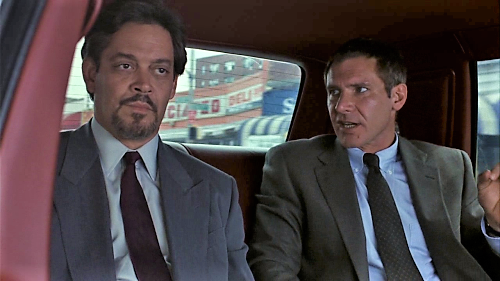
Scott Turow introduced him to me in the 1980s in Presumed Innocent. Stern was then a middle-aged trial attorney at the top of his game defending the chief deputy district attorney charged with murder. (Raul Julio played him in the film version. I cannot read Stern's dialog now without hearing Julio's voice in my head.) 

Since then, he has appeared as a central or minor character in all of Turow's Kindle County novels. I suspect the novel I finished reading last night may be his last appearance.

Sandy Stern, at eighty-four, is retiring from the practice of law. But he takes one last criminal case before he hangs up his gloves -- to represent a life-long friend who is a Nobel-winning scientist, and is now charged with murder and fraud involving a cancer drug he has developed.

Turow then takes us on a ride through the fun house of our lives where mirrors distort perceptions of others and ourselves. Sandy learns things about his friend -- and himself -- that he may never have learned without the artifice of a trial.

In the end, Sandy throws off the shackles of comparing himself to other people, and accepts the fact that he has led a good life. Throughout the novel, the theme of grandchildren plays in the background.

I have already told you one reason I enjoy Turow is that he is not a hack writer of legal pulp fiction. He writes what rightfully can be called literature.

Here is the only example I will provide right now. During the course of the trial, Pinky, Sandy's teenage granddaughter, has discovered that life is not quite as black and white as she thought it was. They have a conversation.

"I mean it's just not fair, Pops. Life isn't fair,"
"Well, dear Pinky," he says, again taking her hand, "it has been fairer to me than to many other people. And to you, too, I dare say, although it may not always seem like that. But in the end, Pinky, we must heed the response of a revered philosopher -- I forget his name -- who was famously asked by a student if he believed life was fair."
"What did he say?"
Stern stubs out the cigar, tightening his grip somewhat on Pinky's soft fingers.
"He answered, 'Compared to what?'"
I have probably seen the last of Sandy Stern -- unless I decide to read any of the Kindle County novels. And this could be the last of Turow's novels. He is only three months younger than I am. He takes time writing his work, and there may not be enough time remaining for him to provide us with another.

That would be fine. All good artists live by one rule.

Leave them wanting more. 


Thursday, June 04, 2020

waiting for justice


I am not very fond of novels. At least, not novels published these days.

They tend to be something to read when you just cannot bring yourself to clean the aquarium or wash the car.

There is only one contemporary novelist that falls outside that proscription for me -- Scott Turow. I was hooked with his first novel, Presumed Innocent, in 1987. In the following thirty-three years he has written a total of twelve novels. The twelfth, The Last Trial, was published last month.

It would be easy to say that I like his writing because he is a lawyer who writes knowingly about his profession. And there is some truth in that. I do like reading stories about my former profession.

But that is not the sole reason. I like Turow because he writes literature. His colleagues jokingly refer to him as F. Scott Turow. He delves into the human condition while telling us interesting tales. "Donne had declared that no person is an island. He had it exactly wrong. We all are."

When DHL brought me my copy on Saturday, I decided to clear my reading calendar starting yesterday, I am now two-thirds of the way through its 450 pages, and I am not the least bit disappointed. He has chosen to narrate all of the court scenes in the present tense -- a choice that adds just the right amount of attention and immediacy to his story.

About five minutes ago, I read this paragraph that sent me off on a little reverie:
Like all trial lawyers, Stern has mixed feeling about juries. On one hand, Stern venerates their role as fundamental to liberty. Yet back in the jury room, they will sometimes construct a reality that bears little resemblance to what they've heard. As a lawyer you are trying a case according to century-old rules, and they retire and decide they are playing SimCity or another game his grandchildren liked, where the universe constructed bears only occasional resemblance to your own. 
The year was 1985. I had been hired by a young black man, Billie, to represent him in a Driving Under the Influence of Intoxicants charge. The outcome of the case would have a big impact on his life because he had twice been convicted of the same charge.

It was late on a July night when Billie and his brother drove from Portland to one of its suburbs to pick up Billie's wife and children. The town was one of those former mill towns where almost all of the residents were working class. As far as I know, almost no minorities lived there.

Billie and his brother got out of the car to let his wife know they had arrived. A town police car saw the car pull up, and the police said they saw one figure walk in front of the headlights.

By their own admission, the police said they stopped because they were curious what two young black men were doing in town. During the conversation, the police noticed Billie had been drinking; his brother had not. After a few agility tests that Billie flunked, the police arrested him for what we slangily call "drunk driving" even though both Billie and his brother told the police that his brother had been driving.

It seemed to be an airtight defense. At trial, the police officer testified that he thought Billie had walked in front of the car as he was driving up. But the officer admitted it was hard to see with headlights shining in his face, and he was candid in testifying that he mixed up Billie and his brother at the scene at least once when talking with them because they were physically similar. They were brothers.

Billie's brother testified that he had driven the car.

When I completed my closing argument. I felt like Atticus Finch. I had even stolen a line from Harper Lee as my last sentence: "Having taken an oath to God to give a true verdict based on the evidence provided, I deeply hope and trust that you all perform your duties as moral and lawful citizens."

Then, came the part of every trial I always dreaded. The wait while the jury deliberated over the evidence. I was positive that it would be short. It wasn't.

Jury deliberations are considered to be one of the most solemn and secret rites in the judicial system. Once the door closes them in, they live, as Turow wrote, in a world of their own construction. What happens in the confines of the room remains there until the jury renders its verdict.

The jury deliberation room was badly positioned in that courthouse if confidentiality was its purpose. The door opened onto a long marble hallway that opened onto a central staircase. It was essentially a megaphone.

Billie and I were sitting half-way down the hall. When jurors spoke in a normal voice, we could hear nothing. But if they raised their voices, we could hear it all.

And raise their voices they did. A male juror was upset at someone's stupidity. Then he bellowed: "Of course he's lying. They always lie for each other."

Billie looked sheepishly at me. My better nature thought the juror might be referring to the obvious point that familiy members stand up for each other -- an argument that the prosecutor was well within the law to make when he made it.

Then, there was no doubt that I was being painfully naive. "Niggers always lie for each other."

I shot up from the bench ready to object, mistakenly thinking I was still in trial. Then, I recognized my dilemma. The juror was out of line, but I should not have heard what he said.

The bailiff was sitting in front of the jury door. I asked him if he had heard what I heard. He had.

I asked the judge's secretary to call the prosecutor to the court room. I told him what I had heard and he talked with the bailiff. Now, we were all in the same morass. There was no option but to talk with the judge.

The judge had the power to interview jurors, though it is a power that is seldom used because it undercuts the myth of confidentiality. And lawyers are loth to see that happen when a jury is still deliberating because no jury can then deliberate without the interview tainiting their process.

In this case, the prosecutor saw what I considered to be the obvious way out. Neither of us would have trusted the jury's verdict under the circumstances. He decided enough harm had been done.

The judge discharged the jury, and Billie went home. Unfortunately, because alcohol is the poison it is, I saw Billie in two subsequebt cases -- including a rather acrimonius divorce.

I was talking with a lawyer friend yesterday. We served in the Air Force together before we both wandered off to different law schools.

I called him to discuss the death of George Floyd. My former school-mate is one of the few black friends I have, and I was interested in hearing his take.

He currently practices in DC. Not surprisingly, we sounded as if we were in an echo chamber because we kept repeating similar sentiments.

He then asked an interesting question: "What do you think is going to happen when the four policemen are acquitted?" I was taken aback.

"Steve, certainly you don't think any of them will be convicted do you? What are the odds of that happening? The jury system is sacred to me. Without it, we would be socially poorer. But the odds of a conviction are not there. It is possible. But I doubt it will happen."

I realized that he was talking out of experience. He had represented several police officers over the years.

It is extremely difficult to get a conviction of a police officer even with the most damning evidence. A lot of people (I would venture a large majority) see the police as a line of defense between order and mayhem. The feeling is international. The Chinese Communist Party uses the same tactic in claiming it is the only institution that can prevent the Maoists from carting off the Chinese middle class to re-education camps -- or worse.

That is why I am interested to see what will come out of the protests over George Floyd's death. The Congressional Black Caucus is discussing the possibility of essentially federalizing all local police procedures with yet-to-be-disclosed standards. There certainly will be a lot of constitutional issues raised with that aopproach.

A better (and far more lawful) move would be to enact reforms at the state and local levels. Reforms that take into account the difficult job we ask the police to perform and to protect the rights of all citizens from abuse.

Maybe Turow's next novel will tackle that issue. 

Wednesday, June 03, 2020

cashew -- ¡salud!


Not everything on my trip to Manzanillo yesterday was a disturbing tale.

Because all of the parking spaces at Telmex yesterday were chock-a-block, I had to park around the corner from the office. And I am glad I did.

Several businesses, including Telmex and the Nissan dealership, are tucked into a tiny corner of Manzanillo's industrial area. Getting there is a game of playing dodgeball with lines of semis.

A few steps into my walk to join the telephone line, I noticed something on the sidewalk. At first, I thought it was a chili. Bright red with a thick stem.

I should not have made that mistake. It was a fruit, but of a far more exotic nature -- and one of my favorite American products. It was a cashew apple -- or, as it is called here marañón
. We discussed my interest in cashews last May in cashew -- gesundheit.

I say "American" product because the cashew tree is one of the few fruit trees around here that are native to the Americas. Unlike mangoes coconuts, and limes that are from Asia, cashew trees were native to the Caribbean islands, northern South America, and Central America when the Spanish arrived.

The Spanish and Portuguese shipped the trees to their various colonies and trading partners around the world until Vietnam, Nigeria, and India are the three largest growers of cashews. The American country with the highest production is Brazil. At number 14.

If you had asked me a year or two ago where the cashew originated, I would have said India. There is a reason for that. I use a lot of cashews in my cooking. And the Spanish name for cashews is "Nueces de la India" -- right there on the front of the nut jar. Indian nuts. But I would have been wrong. They are 100% American.

Harvesting cashews is not an easy process. For every nut, the full fruit must be picked and then separated into two parts. Because the fruit has a short shelf life, it is usually eaten locally.

The big money is in the nut that requires the type of extensive processing we associate with macadamias before it ends up in your pantry. And one day we will talk about that.

What struck me as strange is that the tree producing the cashew apples rotting on that sidewalk, is not located in a Nicaraguan jungle. It is shoehorned into a sidewalk in an industrial park. 


It is almost a miracle that it can survive surrounded by a sea of concrete -- busily producing seeds that will fall futiliy onto infertile ground. Driven to reproduce; but doomed to live a solitary life until it is cut down or dies of old age.

I suppose we are not that different. The tree and those of us who have managed to survive enough years to tell tales of The War to a younger generation who has no idea which war we are talking about.

But we continue putting out our fruit. Doing what drives us. What keeps us alive.

And that is nothing to sneeze at.


Tuesday, June 02, 2020

not going gentle into that good night


Sometimes you hear a story and you wish you had been there -- if only because it could not have possibly been as bad as the teller made it sound.

And sometimes, you wish you were not a witness to the same story. Or, in this case, two stories.

I have needed to make a trip to Manzanillo for almost a month for a reason that would silence the most adamant stay-at-home-mom. I had dropped off some cl-zz mmm drzzz, and needed to pick them up. (These Zoom connections are not very reliable.) Let's just say, I needed to go.

Two places I had not originally intended to stop were Telmex and Telcel. I thought I had come up with a fail-proof idea to pay both bills on-line. And it may have been a good plan. But, for the past two days, I have not been able to connect with either server. Worse, I had just purchased a new printer that would not print out my bills to pay in person at Oxxo -- even if I could have loaded them.

Since I was already heading to Manzanillo, I added them to my stop list.

Because it is at the furtherst point of my trip, I stopped at Telmex first. I almost did not stop because there were two lines outside the building nearly as long as the line at Banamex in Melaque these days. But I did. After all, I had plenty of time.

And it was good that I did have the time -- because I spent it. I had been in line for about 15 minutes when I took the photograph at the top of this essay. There were a total of 23 people standing in the line I was in to make payments. The other line was for customers with service issues.

There were only two people in line in front of me when an irate fellow made a beeline for the door. The young man admitting us showed him the correct line, but Mr. I. M. Important pushed right past him. He obviously belonged in the service line because he was sporting a sour look and what looked like a non-functioning modem.

I do not often see Mexicans react negatively to life's problems, but this guy's act of hubris caused more than a few mutters. We all expected him to be immediately ejected, but he wasn't. The young Mexican standing in front of me lamented it was one of the weaknesses of Mexico -- the wealthy always get their way.

When I was admitted into the building to stand in line to pay my bill, the intruder had been stopped by an older Telmex representative. Though he ranted and raved, the representative kept repeating that he needed to go get in line.

The Mexicans in line around me tagged him as a northerner. It was not until he left that I recognized him as a citizen of one of the countries north of Mexico. Which one does not matter.

Whenever I write about one of my stand-in-line experiences, there are at least two readers who will say I could have avoided it all with some solution each had earlier proposed. But, if I had done that, that ill-mannered northerner would have been the sole representative of foreigners in Mexico. It did open my eyes to behavior I usually only hear about.

After that 45-minute adventure, I drove to Telcel. The line there was just as long as the Telmex line. I drove on by. I will see if I can connect to the Telcel site on my telephone.

But I made one more stop -- to pick up some fried chicken. There was only one other customer in the place. He obviously had been served his order, and he was not happy. I must have entered in mid-rant.

"I told you I wanted three breasts. You know. Chicken boobs."

The cashier did not know. He did not speak English.

I try to avoid imposing myself into these situations, but I could not help myself. I asked what the problem was. It was rather simple, he had ordered a three-piece dinner and thought did not get what he wanted.

I counted the pieces on his plate. A thigh. A drumstick. A wing. Three pieces.

He looked at me as if I were an idiot. "I wanted three breasts. These are not three breasts. And, by the way, tell him he has mispelled 'pieces;' It's not "piezas."

Of course, he had not paid for three breasts. That meal would have been three times more expensive than his order, and he was only going to pay for the three-piece dinner.

And, out of the blue, he blew. "Someone needs to tell these people how to run a business. They should eat at a Tim Hortons and learn a lesson or two."

Then, he was gone. Probably to have an Angry Old Men lunch with the modem pusher.

These are not the only two similar incidents I have witnessed here -- or elsewhere in the world. I suppose there are a myriad of reasons why these outbursts occur.

I often suspect it is the fear of aging -- or death. Some might label it White Privilege. Or it may simply be people who have not encountered many obstacles in their lives and lash out because they have no idea how to persuade people -- or how to comply with simple rules that others are obeying.

Whatever it is, I am not entirely immune from it. Every time I get frustrated with someone double parking or pulling out of a side street without looking or burning brush, I am acting out the same nonsense that I witnessed today.

And it does not have to be that way. If I need to conduct business and there is a line, I get in the line and wait like everyone else. If my food order is not what I expected and I receive an explanation of my error, I smile and say "gracias." And if the 1973 Datsun pickup driving on the highway at 10 MPH slows me down, I decrease my speed and wait for a safe opportunity to pass and be on my way.

It would not be bad to be known as that pleasant old man who lives down the lane.   

Monday, June 01, 2020

russian in the dark


My Russian has improved.

In an attempt to buff up my very rusty Russian language skills, I installed four compartments in my bedroom. Each compartment provides intensive instruction before moving me on to the next compartment.

For some reason, probably enunciated by Henry James in one of his more arcane tomes, the compartments are installed at ceiling level in my bedroom.

I have no idea how the system worked -- whether or not I finally learned the difference between the first and second conjugation of Russian verbs. I don't know because, as you have already guessed, it was a dream.

I am surprised that I had any dreams last night because I was having trouble sleeping. I am not certain why. It could have been putting off my Spanish lesson yesterday until 1:30 this morning. Or it could have been my midnight carbohydrate-laden dinner. Or even the result of my up-close-and-personal encounter with the toxins of my ant buddy (ants in my pants).

Whatever caused my Moscow nights reverie, it was a reminder of just how little we know about our minds. The brain is still an undiscovered country for science -- not that researchers have not tried to Mark Twain its depths.

So, we are left with more poetic or dark (if you are a strict Freudian) interpretations of our night-time adventures.

I had intended to drive to Manzanillo this morning. But I had not yet paid Antonio (the guy who so meticulously tends my pool) for his services.

He arrived just as I was finishing breakfast. I paid him and we chatted about the pool, the coronavirus in Mexico, and the economic contraction he has seen around town.

My Spanish was far from perfect, but both of us were able to communicate well enough that we kept up a ten-mionute conversation while he cleaned the pool. The fact that he understood me was reward enough.

Over the years, I have tried my hand at several languages: Latin, German, Russian, Greek, Italian, Spanish. Even a bit of British English.

I have never been a natural. Each language has been a struggle. I suspect everyone who has seriously taken a run at a new tongue feels frustrated trying to find the right word or phrase.

For me, I now think I know what people with brain injuries feel. Well-constructed thoughts are in my head, but I cannot convey any of them in the manner they were constructed. Instead, I do what every language instructor suggests: if I cannot think of the word I want, I use words I do know to describe it. As if I were in the mid-stages of dementia. (As a side note, I have done that for years in English.)*

Maybe that is all the dream was about. I had struggled with my Spanish lesson last night, and my brain was doing its man-thing by trying to conjure up a solution. And, as untended minds are prone to do, it wandered off on its own tangent.

Or maybe I really am supposed to install Russian language compartments on the ceiling of my bedroom.

After all, sometimes a cigar is just a cigar. 


* -- One example. Probably 30 years ago at work, I was sitting at the lawyer lunch table. My story to the group hinged on a very simple word that I could not dredge up out of memory. So, I resorted to description. "You know. That thing in your living room that you watch. It has a screen -- and knobs." My friend Roy said: "Do you mean 'television?'" I nodded and continued with my story.

Roy stopped me. "I'm not worried that you could not remember the word, but I am a bit worried you think televisions still have knobs."