Saturday, August 07, 2021

an eggcorn in a pear tree


No one would ever confuse me with St. Francis of Assisi.

I wear too many clothes for that role. Usually. But my house is quickly turning into an animal sanctuary, and I have become a protector of some creatures I would have readily chased off in the past.

Yesterday, as I was entering the library, I noticed a small lump of debris in front of the sliding glass door. I put the plate I was carrying on a table and went back to clean up whatever was disturbing the order of the patio. Something one of the turkey vulture neighbors had dropped, I thought.

When I went back out, the "debris" had moved. It wasn't until I bent over and had a closer look that I realized it was not a piece of detritus; it was a young ground dove. And I knew where it had come from.

About two years ago, a ground dove couple had set up nest-keeping in the vines in front of Omar and Yoana's bedroom. Several generations of doves have popped out of the vines since.

It was obvious that this little guy had left the protection of the vines far too early. He needed to go back home.

Of course, small birds do not distinguish between the kindness of strangers and the wiles of predators. When you are that low on the food chain, you are a potential meal for almost everything.

When I reached for it, he feebly flew away. I ended up chasing him around most of the patio until he simply resigned himself to his fate and let me pick him up. Back in the nest he went.

It was not until this morning that I noticed that he is not alone. He is one of three doves in the vines. They made me smile. But they also made me start humming a song. "The Twelve Days of Christmas" -- with its litany of bird and shrubbery references.

Because my mind works like this, the song 
reminded me that it contains one of my favorite eggcorns.

If you have not heard the word before, you should remember it. It is useful. We encounter (and often create) eggcorns daily.

An eggcorn is a word or phrase that is mistakenly used for another word or phrase because it sounds similar and seems logical or plausible. And some of them make just as much (or more) sense than the original.

The word came about because some people called "acorns" "eggcorns." They look like eggs -- and they are essentially the eggs of oak trees.

We all know them when we hear them (and often mistakenly use them ourselves).

  • "another think coming" 
  • "platemats" 
  • "takes two to tangle" 
  • "wet your appetite" 
  • "take it for granite" 
  • "one foul swoop" i
  • "death nail" 

But none of those eggcorns were the object of my dove-watching. "The Twelve Days of Christmas" is chock-a-block with birds. Partridge. Turtle doves. French hens. Geese. Swans.

And then there is verse four where my true love sends to me four "calling birds." I always found that phrase a bit odd. It is true that 19th century Brits referred to songbirds as calling birds. But it turns out "calling birds" is an eggcorn.

The original lyrics refer to four "colly birds." That word sounds a bit foreign to us because it has gone out of general service. "Colly" derives from "collier." A reference to coal mining. Black as coal. Thus, a blackbird.

So, there you have it. Eggcorn. A new word that you can slip into your leisurely conversations in Mexico.

And here is another. "Crash blossoms." We will discuss it next week when the subject of deadly chipmunks will be on the plate.

But, now, I must put on my monkly robes, and go tend to the animals -- before they decide I am lower on the food chain than they are.   

Friday, August 06, 2021

hawaii to the rescue


I am not a very good planner.

My life tends to be a constant ad lib performance. And I just indulged in another opening night recently.

I told you in killing me softly that I had decided to resurrect two life-style changes that had served me well for years, but that I had set aside almost three years ago. Due to some blood pressure and glucose issues, I decided to ramp up my exercise program and cut down my food intake. Neither of those changes were "diets," in the usual sense of that word. I was not giving in to the Dolly Parton diet for six-weeks only to slip right back to where I was before she and I started discussing Jolene.

For two years, I completely changed my lifestyle. I walked about 4 hours each day and cut back on my caloric intake -- eventually adopting a permanent intermittent fasting routine for my meals. I ate only between 2 and 6 in the afternoon. My weight dropped -- along with my blood pressure and glucose.

This time, rather than transitioning into my new program two weeks ago, I simply jumped. It was not quite zero to 200 MPH. But it was close.

I cut my walking back to 5 to 10 miles a day. That is working fine. The 2-6 intermittent fasting has not worked as well as it did last time. Probably, because the change was too quick. I have thrown off my metabolism enough that I cannot exercise far from the house because of -- well, "digestive issues." And I felt completely fatigued.

The worst problem was that I had almost stopped eating. For the past few days, I have barely been eating more than a few bites. If I were a dog, there would be whispers in the corner about the full life I have lived.

Uncharacteristically, I admitted that I had made a mistake. Today, I expanded my eating window to noon to 6. I will try to eat two medium-sized (planned) meals in that time.

This re-think was a direct result of my favorite local grocery store. I had stopped by yesterday afternoon to buy some tomatoes, when Carlos, the owner's nephew, whispered that they had just been to Costco, and had managed to score one of my favorites -- ham. I grabbed the first one.

For the past two weeks, I have been having a bit of trouble even thinking about being creative with food. The ham has changed that. On the way home, I imagined ham sandwiches, baked ham with roasted asparagus, ham and bean soup (with lots of vegetables), and other porcine delights. But I knew exactly what was going to be first on the list.

This morning I made what I call frittata de Estif. The ingredients change every time I make it, but this morning's version included sautéed onion, kalamatas, grape tomatoes, capers, Spanish olives, habanero, and diced ham covered with a mixture of two eggs, worcestershire sauce, and balsamic vinegar. A coating of marjoram topped it off. It is the start of a good friendship with that ham. (Interestingly, I was able to eat only half of the frittata.)


I will try the new eating window to see if it makes a difference. I already feel less fatigued. Maybe it was the rest of the cherries I bought yesterday -- and ate in the lsat hour.

Alex at Hawaii may not have a solution for every problem in your life, but he (and Carlos) certainly filled the gap this week.   


Thursday, August 05, 2021

mexico is a middle class country


It is not the first time I have heard the mis-representation.

This morning while I was scanning the local Facebook pages, I was struck by the number of times people referred to Mexico as being "a third-world country" or "poor" or "lacking adequate medical services."

The topic was the recent wave of The Virus that is sweeping through the local villages, but I have heard the same comments during discussions about other aspects of life in Mexico. One commenter went so far as to claim Mexico was "one of the poorest countries in the world because every family has at least seven kids."

I am not certain where all of that comes from -- false comparisons with Canada and The States are undoubtedly one source. But each of those characterizations is simply false.

This is modern Mexico.

  • Mexico has the 12th or 15th largest economy in the world -- depending on how the figure is calculated. Better yet, by purchasing power, it has the 11th largest economy in the world.

  • Mexico's fertility rate, once very high prior to the 1960s, is only 2.1. The creation of a strong middle class has had the same effect as it has had in other countries with an emerging middle class -- births drop. Without immigration, Mexico could barely break even with births and deaths.

  • Mexico is not a third-world country. It is a member of the Organisation for Economic Co-operation and Development (OECD), a club for mainly rich nations. And its economy justifies that membership.

  • Terms like "third-world" are remnants of the world's colonial past. The World Bank classifies Mexico as "upper-middle income."

That is not to say that Mexico does not have its problems. And a lot of those problems (infrastructure, education) are a direct result of the lack of taxation. Mexico's government takes the lowest percentage of GDP as taxation of any OECD member -- 18.8%.

I am always a bit baffled when I hear people describe some of my neighbors as being "poor" when they are clearly middle class. Maybe that is because the boundaries of class are always nebulous.

The OECD defines middle class as earning 75% to 200% of the median income in the country where they live. For Mexico, that would be a range of 75,000 to 200,000 pesos each year. Or $3,757 to $10,019 (US) annually.

To Canadians and Americans those figures seem low. That is partly due to the fact that we come from countries that are equivalent of the economic Amazons and Googles of the world. To our Mexican neighbors, we are all Jeff Bezos. 

Based on those calculations, during the past few decades, Mexico has grown a solid middle class. Prior to the outbreak of The Virus, Mexico's population was classified as 55% middle class, 19% rich, and 36% poor. 

The Virus has changed everything. Because of it, Mexico's economy is currently suffering its worst recession since the Great Depression of the 1930s. The Mexican government, with a historically-based aversion to debt, did very little to assist workers or businesses. As a result, Mexicans dropped out of the middle class faster than freshmen from an Aristotelian Logic class.

No one is certain yet how the recession has affected the absolute size of the Mexican middle class. We do know that the net size of the middle class in Latin America was reduced by at least 4.7 million people. Mexico most likely has suffered a disproportionate loss in that group.

That is what is so ironic about people referring to Mexico as a "third-world" country and being "poor." It is not.

But The Virus has offered proof of how tenuous progress can be. Mexico's people were in a much better position economically to handle the ravages of the current waves of disease than it would have been 50 years ago with a primarily low-income population.

We should be celebrating the success of our Mexican neighbors. And be a bit more sensitive to the adjectives we apply in this country we call home.


Wednesday, August 04, 2021

scaling the weights


My idea of an exotic shopping trip these days is to drive fifteen miles down the coast to our county seat of  Cihuatlán.

The mere mention of "county seat" conjures up loading granny and the three young 'uns in the 1963 Ford pickup to stock up on vittles for the comin' blizzards. Plenty of hay and chicken feed for the stock.

When I first moved to Mexico, I would drive to Manzanillo each weekend primarily to pick up my mail at Mailboxes, etc., but also to visit the big box stores to shop for exotica. When I closed my mailbox, the trips dwindled in frequency. I am now lucky to avoid driving there except for twice each year to drop off dry cleaning and to see what wild options La Comer is offering in meat.

The reason is simple. I can buy almost everything I need in the villages on the bay. If I can't, Amazon is just a few clicks away.

Now and then, though, I need to drive to Cihuatlán. And I did just that yesterday. 

I told you that I have returned to my exercise and eating regime that served me so well three years ago (killing me softly). I had recently become concerned that my blood pressure, glucose levels, and weight had slipped out of control due to my own neglect.

Because I had not tested either my blood pressure or glucose levels for almost three years, I was pleasantly surprised to discover they were in acceptable ranges. I knew that was not going to be true of my weight.

So, I pulled out the test for it -- a digital scale I bought in San Miguel de Allende almost five years ago. I stepped on it and was prepared to receive the bad news. The dial merely stared at my blankly. No matter how many times I stepped on and off the scale, it was no more communicative than the sphinx.

Changing the battery did nothing. It was simply another electronic device that had surrendered its desire to live to our temperature and humidity.

None of the local village shops had anything on offer, but I was certain I could find what I wanted at Cihuatlán's main department store -- Coppel. And I did. I was in and out of the store in less than five minutes.

Mexico is currently suffering from another wave of The Virus. Our area missed most of the worst of the earlier waves. We are not being spared in this one.

As a result, the state government has imposed a mask requirement for everyone almost everywhere in the state. Yesterday, I would guess about 40% of the people on our main street in Barra de Navidad were compliant. In Cihuatlán, almost everyone was masked. When I entered Coppel, a mask was required, my temperature was gauged, and my hands were sanitized. I felt as if I was prepared to perform surgery.

One of the current restraints in place is that all open public-gathering places are closed. With police tape. Our local jardins look like the scene of a long-past crime -- or perhaps a crime yet-to-happen in the future, as in Minority Report.

The jardin restrictions are not very effective. In the three jardins I have visited in the past two days, citizens have no compunction in lifting the tape to use the park that belongs to them. Sometimes, they are chased off by people purporting to have authority. Most often, they do what they want to do -- and then leave.

Today I noted a marked increase in the use of masks both in Barra de Navidad and Melaque. I suspect most of that is due to the number of family members who are currently ill (and fighting for breath) in our neighborhoods. Few things focus one's attention as much as the wolf at your door huffing and puffing from The Virus.

While I was in one store, the owner was talking with me when two members of Civil Protection came into the shop in their orange Space Troopers outfits. They asked the owner if she had a mask. She did. They then told her to put it on. She did.

But the moment they left her store, off came her mask. I watched that same pantomime repeat itself as the Presence of Apparent Authority made their way down the street. I saw a couple of people who had previously been wearing masks doff them in some sort of populist solidarity.

Where it truly matters, people seem to be doing the right thing to help bring this wave under control. Mexico has had terrible problems with its vaccination program. As of today, only 38% of the population has received one jab, and 20% are fully-vaccinated (that latter number includes those who have had the one-jab vaccines).

The attitude toward vaccination has changed, though. Almost all of my young Mexican acquaintances told me they would never be vaccinated. I kept working on them, sweetening the possibility of choosing the shot. When the age limit was lowered to 18, each of them lined up. I am certain my arguments were far less effective than watching an uncle suffocate. Some arguments are more real than others.

I am not always good at timing. But it appears I picked a good time to increase my personal defenses against the current wave. The new scale will give me an idea how quickly my weight drops -- along with the steady improvement of my blood pressure and glucose measures.

As for the numbers that showed up on that scale fresh out of the box? That will be my secret for now. I will save full disclosure for better circumstances.


Tuesday, August 03, 2021

another bond villain strikes out


Sometimes even the most prosaic event can be another adventure chapter.

This morning, I was reading The Oregonian in bed -- something I have done for decades. The only big difference now is that I now do not need to look for my newspaper on the front lawn. It is delivered directly to my telephone before either the sun or I am out of bed.

Usually I can read from the front page to the end of the sports page without resorting to looking for my reading glasses. Sleep seems to give my eyes the elasticity they need in the early morning without resorting to corrective lenses.

Maybe I did not get enough sleep during the night or my eyes just did not get whatever they thought they needed to provide unaugmented service in the morning, but when I opened the newspaper, I had trouble reading. My regular reading glasses were on the day bed where I had left them last night. Rather than get out of bed to retrieve them, I rummaged through the night stand knowing I had placed a spare pair in a glass case with a couple of microcloths.

I popped the case open -- and paused. Something did not seem quite right. The glasses were there along with the cloths. But there was something else. 

When I turned on the reading light above my bed, I saw it. I had just experienced a true Bond moment. It was as if Ernst Blofeld, knowing my eyesight would be weak in the morning, had planted a deadly blue-ringed scorpion where I would completely miss its presence until it had done its duty.

Of course, my unexpected visitor was not a deadly blue-ringed scorpion. I know that because I made up the name. But if I had not noticed the odd wadded-up shape in the case, I could easily have been stung if the scorpion felt trapped.

What it was was a rather common scorpion in these parts -- the Jalisco Coast Scorpion. In the six years I have lived in my current house, I have seen this variety far more than any other. They always remind me of what we called "potato bugs" in Powers -- or, as they are better known "Jerusalem crickets." It must be the mahogany and beige camouflage.

I had just told someone last week that it had been a long time since I had seen a scorpion in the house. And the presence of this one surprised me. How could a scorpion that size get in my glass case? The case seems to close tight, but scorpions are capable of flattening themselves to gain access to almost any space.

I also have no idea how long he may have been there. Scorpions can survive for long periods without nourishment. The experts say some scorpions can survive up to a year without nourishment.

Well, this one won't. Rather than kill it outright, I dumped it in the toilet, shot it for you, and then sent it on its swirly way down the sewer line.


Scorpions are survivors. Like many other crawling creatures, sewer-dousing is not necessarily certain capital punishment. Anyone who has watched cockroaches scramble out of sewers will know that.

So, there still may be a little justice in the end. For all I know, the scorpion will clambor back through the sewer line, hide in my toilet, and wait for the opportune moment to settle scores.

I may need my reading glasses in the bathroom for the next few days.


Thursday, July 29, 2021

understanding place


"To understand the world, you must first understand a place like Mississippi."

So said William Faulkner.

I do not know about the Mississippi part of that sentiment. But I think I know exactly what the Sage of Yoknapatawpha County meant when he wrote it.

While I was finishing up my daily walk on the house's upper terrace this evening, I started wondering how Faulkner would understand the village I call home. I do not know about Faulkner's reference to Mississippi because I have not spent a night there. Unlike the secessionist arc of states from Texas to Florida where I have spent quite a bit of time, my visits to Mississippi (just like prosperity) have simply been passing through to someplace else.

That is too bad because Mississippi, if Faulkner is to believed, is one of the regions where People of Place live. They seem to draw their very essence from the soil as much as any grand crus from its terroir.

I have been sticking close to home for the past two days. On my trip north, I developed a rather nasty allergic reaction to something that masqueraded as a summer cold. I did not think much about it until I returned to Mexico and received an email from two friends here. They too had been fighting what they assumed to be persistent colds. When the coughing did not let up, they went to a local lab and tested positive for The Virus.

They suggested that our group should get tested just in case we had been infected. I put it off until yesterday.

The vines in my patio tend to get out of control while I am gone. So, Wednesday, while Dora was here to watch me fall off off the ladder, I started pruning. I had almost completed the third of four planters, and was at the top of the ladder. Without warning, my head felt as if it had gone into orbit in advance of the billionaire astronauts. Everything was in a multi-G-force spin.

Fortunately, I made my way down the ladder, put away my tools, and put myself to bed where I slept away 5 hours of the afternoon and 10 hours of the night. (I usually get no more than 5 hours total each night.)

Because I was still weak this morning, I trundled off to a local lab to get my too-long-neglected covid test. My procrastination did not cost me (or the people I had been in contact with) anything. The test was negative for covid. And, oddly, my cough was gone. By the afternoon, I had my strength back. What has not gone away is some immediate bowel issues. Thus, my walking was restricted to the upper terrace.

While I was up there, Barra de Navidad experienced one of those sunsets that I doubt are seen Jackson. Maybe in Biloxi. But it was not the sunset that caught my immediate attention.
 
One thing this area shares with Mississippi is heat and humidity. At 9:33 in the evening here, it is 84 degrees with 82% humidity. In Jackson, it is 82 degrees and 88% humidity. We are almost kissin' cousins.

In this heat at this time of night, sounds carry. For the past two nights, I thought the vector control trucks were on their assassin rounds to bring the Aedes aegypti mosquitoes under control. We have had a surge of dengue here -- along with a wave of Delta variant infections. 

But I was wrong. There were no spray trucks killing off the insect population. When I listened carefully, I knew exactly what the sound was. The song of cicadas. Or, as my Colombian cousin Patty more-poetically describes them -- exploding crickets (blowing up jiminy cricket).

Every year about this time, they emerge from the soil, sluff off their larval carcasses, and fly off to sing their Reddy Kilowatt songs to attract mates for the next reproduction cycle.

I could almost imagine a modern-day Dilsey Gibson returning home from his law office and sitting down under a Spanish moss-bearded oak in his back yard to watch the last streaks of purple disappear below the horizon while he listened to cicadas imparting their buzzing wisdom accumulated over thousands of years to be imparted from one of God's creatures to another in a place where people had lived for generations and relied on the other strengths that God gives those who love his creation and the creatures in it.*

It made me happy tonight.


* -- My homage to Faulkner. Mrs. Richardson did leave her mark on me.    

Tuesday, July 27, 2021

killing me softly


Yesterday may have been an "if-it-isn't-one-thing-it's-another" day (gandhi smiles). But today was its first cousin once removed: a "one-thing-leads-to another" day.

Some time ago (the earth's crust was cooling at the time, if my memory serves me well), I decided I was going to grab ahold of my health with both hands and a sturdy shillelagh. My diet, though high in aesthetic appeal, was a nutritionist's nightmare. I was sorely overweight. And I had several medical conditions that needed tending to.

So, I did what my obsessive self is prone to do. I threw myself into a diet and exercise program that would have made Torquemada's day.

I religiously walked 15 miles (or more) each day. I stripped out as many carbohydrates from my plate as I could. (That was a bit difficult because the low-lying fruit had already been picked. I do not care for most fruit and I am not a user of alcohol.)

Nancy Dardarian over at Countdown to Mexico convinced me to try intermittent fasting. I ate only two meals a day at 2 and 6 in the afternoon. The result was that within 6 months I had carved off 50 to 60 pounds from my Falstaffian body. 

And then one day, for no apparent reason, I stopped the whole process. Just stopped. And I am not certain why. No more walking -- and, worse smashed potatoes and bread returned to my plate. And no more daily blood tests -- for over two years now.

I have some theories. The first is that my Mexican neighbors started talking to me in hushed tones asking if I had cancer. When they did not suspect cancer, my friends were kind enough to point out that I looked horrible. The most common comment was that I looked 20 years older. And I felt it. Losing the weight left me fatigued. I did not particularly like the look of the guy I had become.

But that was all vanity. I think I just got tired of sounding like one of those people you dread will sit next to you at a dinner party whose depth of conversation is solely Their Health Numbers. You know those moments: when you wish that Western Civilization held seppuku in higher regard. Perhaps that is why butter knives are so dull.

That is why I was a bit shocked when I suggested (to myself) it was once again time to put some discipline back into my diet and exercise. As of Sunday, intermittent fasting has reappeared and walking is back on the schedule -- with a personal restriction of no more than 10 miles each day. I am trying a bit of moderation.

Because of the summer heat here in the afternoon, I decided to take most of my steps on the upper terrace. It is a perfect walking track. One circuit of the square (what I call "circling the square" just to raise the eyebrows of mathematicians) is 1/20th of a mile. You can do the easy arithmetic from there.

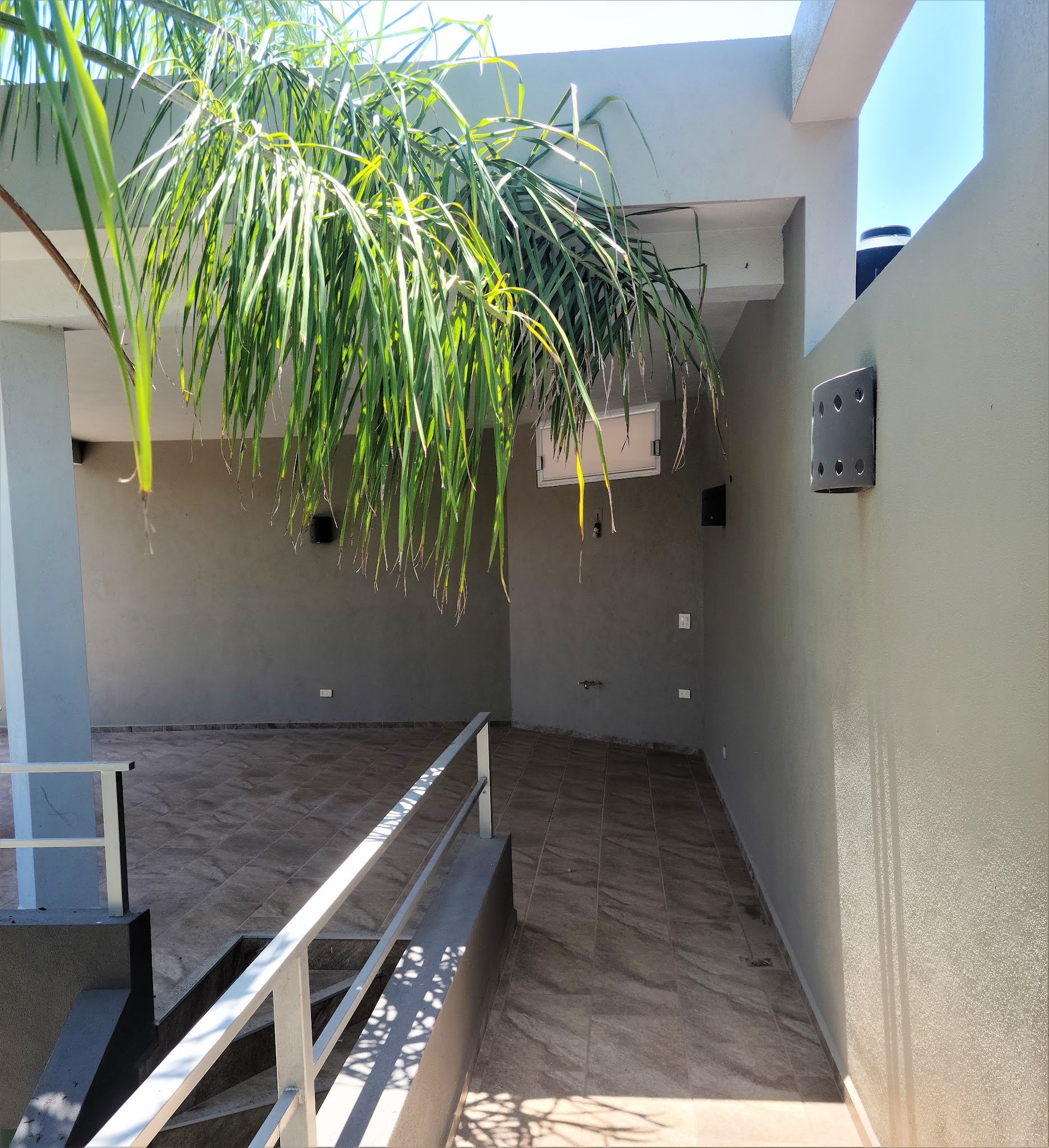
Well, it was not so perfect on my first circuit. Two fronds of  a Queen Anne palm hit my head as I walked under them. There must have been an arachnid convention in session on one of the fronds because I was showered with multiple spiders and scorpions. (The land crabs must have been caucusing elsewhere.)

When palm fronds sprout from the palm's trunk, they are a perky lot. But age and gravity, as we now know from Gillian Anderson, will affect both homo sapiens and palm fronds. The fronds needed to be trimmed -- or I was going to be forced to play George of the Jungle on each lap.

I put my walk on hold and went downstairs to the bodega where I retrieved two limb loppers. In less than two minutes the Ho Chi Me trail was back in operation.

Then, I saw some loose pieces on the palm trunk and used the pole-topped lopper to pull them off. Then another. Then another. Two minutes stretched close to two hours.


On Sunday I was eating a tuna salad sandwich in the swimming pool and dropped a tiny piece of fish on the pool apron. Because this is the tropics, a line of ants appeared almost immediately, and carried the tuna across the patio and up the same tree I was lopping. I suspect it was the equivalent of a human (with the help of some friends) carrying a grand piano from Portland to Seattle. I was impressed.

But, while clearing off the base portions of the dead fronds, I discovered where the ants were homesteading. In my cleanup process, I broke open their nests. They frantically rushed around trying to save as many eggs as possible, including up my arms and legs.

Within minutes they were organized enough to carry off their young to better homes. I suspect we humans could learn some lessons from them.

All of the dead fronds are now collected in seven large garbage bags for tomorrow's garbage pickup (despite the creative suggestion of a Mexican friend who suggested I should just pull them out into the middle of our dirt road in front of the house, and set them on fire). I will need to give the garbage men a sizeable tip. They usually refuse to pick up yard debris due to the limited space in the truck.

My walking track is cleared and the patio is tidied up -- and I am now eating in my four-hour envelope.

Despite what I said about lifestyle changes yesterday, this is one that will need to be permanent.