Saturday, February 18, 2012

squaring off with history

Tiananmen Square.

The words are freighted with Chinese history.  For westerners, it is where students, favoring the heady dream of political freedom, were crushed in 1989.  For the Chinese Communists, it is a constant reminder that all governments fall.

And it was a perfect spot to orient tourists to the political center of China and the physical and psychological center of China’s capital city.  This was the square that Mao built.

After the Communist victory in 1949, Mao Zedong needed a symbol for his “heaven on earth.”  Tiananmen was his choice.

His original dream was to build the world’s largest square.  But he settled for second. He then sprinkled the perimeter of the square with the party’s major government buildings.

Including, the Great Hall of the People, where the Congress meets every five years to ratify the party’s choice for president.


And the National Museum of China, housing many of China’s treasures.


In the center, like a lonely groom on a wedding cake, Mao erected the Monument to the People's Heroes to commemorate China’s revolutionary struggle that culminated in the Communist victory.  Including the war against the the Japanese.  All honored with calligraphy in Mao’s hand: “Eternal glory to the people's heroes!”


Many of those struggles.were acted out in the square. The May Fourth uprising in 1919 that led to the eventual victory of the Chinese Communist Party.  The declaration of the Communist victory in 1949.  Protests following the mysterious death of Zhou Enlai in 1976.  And, of course, the Cultural Revolution -- the revolutionary lashing out of the Red Guard at the growing bourgeoisie.

Ironically, one of the men humiliated during the Cultural Revolution was Deng Xiaoping, Mao’s successor, who brought market reforms to China in the 1970s, and launched China on its path to becoming the second largest economy in the world.

In the heady days of 1989 when communism was collapsing in the Soviet Union and its captive nations, Chinese reformers began criticizing corruption amongst the Chinese ruling class -- believing that economic freedom would lead to political freedom, as it had in Chile.

They were wrong.  Deng Xiaoping, like the fearful emperors before him, turned on the reformers, called out the army, and crushed the protesters in Tiananmen Square.  And inadvertently created an icon of the bravery of freedom for the rest of the world.


The communist leadership knew that governments fall when protests spread from Tiananmen Square.  Our guide warned us that our conversations in the square would be monitored by the police and undercover agents.  The leadership still lives in fear.

Mao has left a mixed legacy.  His portrait is ubiquitous.  On buildings.  In some homes.  On the currency.

But he is little more than a hollow icon for the party to trot out now and then in their quest for legitimacy.  Mao’s mausoleum in the square is an apt symbol.  Heroic.  Cold.  And dead.


What is not dead is the party’s attempt to control the flow of political information to its citizens -- including these giant LED screens in the square.


George Orwell would have immediately grasped their purpose.


With the mood set, let’s start our tour through this odd mixture of socialism, capitalism, and political suppression.

Friday, February 17, 2012

every journey begins …

 Every good writing course begins with several rules.  Near the top is: “Don’t use clichés; they are old hat.”

But I don’t recall anything about covert clichés.

This particular journey began with one big sit -- rather than a step.  Even before we left for the airport, we knew our flight had been delayed.  Roy predicted a “rolling delay.” 

You know how it goes.  The airline knows the flight will be delayed for hours.  But they dribble it out in 15 minute increments.

Roy was correct.  But we decided to take our airway water boarding torture in style.  After checking in and getting our seat assignments, we retired to the Delta Sky Club for a few hours of free food, comfortable chairs, and free internet access.

But all good things must end.  And we knew the 11 hour flight to Beijing would offer somewhat more limited accommodations.

I do not have to tell anyone who has been in the coach section of an airplane in the past few years that it is something to be endured.  Triple that factor with overseas flights.

But we were both lucky.  We had chosen aisle seats in the 4-seat abreast center aisle of our 747.  And no one sat in the seats next to each of us.  Without that extra space, the seat would have been too tight to drag out anything from my small backpack under the seat in front of me.

And when the woman in front of me reclined her seat, I could not use the seat back table to use my 13” computer.  The space was too tight to open it.  So, I used it in the seat next to mine.

To avoid boredom on flights, I pack snacks.  In this case, a packet of jerky, some salt water taffy, a bag of sliced pepperoni, and some sliced sharp cheddar Tillamook cheese.  Fulfilling my sodium intake for about a month.

That may help to explain why I did not particularly enjoy the two Air China in-flight meals.  They were no worse than any other airplane food.  I ate the fresh fruit.  Picked at the rice.  Ate my steamed vegetables.

What I did not do was sleep --– something I cannot do on an airplane.  (My brain is usually too busy trying to fly the aircraft.)  In this case I am glad I was not asleep when we started our flight over mainland China.

Every city we flew over looked as if it was under a shock and awe air strike.  There were repeated bright flashes everywhere.  I wondered if everyone in China was outside pointing their camera flashes into the air.

I was close.  It was the last night of Chinese New Year -- the Spring Festival.  And those flashes were fireworks.  Big fireworks.  Thousands of them.  And they went off continually until midnight.

Even when we drove through Beijing to our hotel, fireworks were fired off within feet of our bus.  It was almost like being home in Mexico.  But I suspect fewer spectators were burned by errant bits of fire.

Our journey may have begun late, but that first step certainly put us in China at an auspicious moment.
 

Thursday, February 16, 2012

a crane’s eye view of china

Saying that you know anything about a country after visiting it for ten days is a bit like saying you know all about Mexico because you dressed up as Pancho Villa when you were a kid.

But I do have some impressions of the place.  Here are a few:

China is a beautiful country well worth a visit.  Preferably a visit lasting more than ten days.  But in those ten days, I put aside some of my prejudices about the country.

The most obvious preconception is that China is a third world country.  If you expect to run across Ingrid Bergman singing “This Old Man” in The Inn of the Sixth Happiness, you will be disappointed.  At least, in the big cities.
 
Beijing is the capital of a political super power.  Shanghai is the financial capital of that super power.  And they play their parts.  Where there were once schools of bicycles, there are now lines of cars.  Where there were once slums, there are software skyscrapers.

In Beijing, the city is as clean as the air is dirty.  While we were there, a cold front moved in that cleared the air.  And two days later, the smog -- terrible smog -- moved back in.

But even the orchards and farms surrounding Beijing are well-pruned and manicured.  Every bit as tidy as a German farm.

Chinese culture is ancient and long-lived.  This is the place Europeans longed to come to obtain the type of luxuries the Chinese considered ordinary.  The Chinese now seek Audis, and send us shirts.

That splendor is still evident in China’s ancient buildings.  But the power of China is not in its past.  And the Chinese take pains to display that they are a modern people living in a modern world.

China’s plutocracy lives in fear of its own extinction.  It has provided a booming and relatively free economy.  Where that economy is inefficient, it is self-inflicted (for example,the number of businesses the Chinese Army mismanages).  But political freedom is not on the table for discussion.

The Chinese I met do not like the Japanese.  Considering what the Japanese did to China in World War Two, that is understandable.  The Chinese do not wear the grudge lightly.  Even though Japan is a near neghbor, it sells very few cars in China.  Our tour guides took great pleasure in pointing out that haiku and bonsai are Chines art forms.  The Japanese merely stole them. 

And, don’t let me fail to mention, it was cold in Beijing.  Below freezing.  With beautiful clear skies.  But I have not felt that cold since my skiing days.  You will hear that weather theme in a few of the following posts.

So, there are some of my general thoughts.  But I have more.  Of course.

The fact that the Communist government blocks all access to blogs has given me time to organize some thoughts on specific topics.  Here is an overview.

Getting there.  Joys in flight.

Trying to understand Chinese.  And some lessons in Spanish.

Eating out.  Why Chinese food seems familiar.

Paying cash.  Something else that seems familiar.

Starting our tour in Tiananmen Square -- where other hopes died.

The Forbidden City -- where China’s imperial history lives on.

The Summer Palace -- cold in the winter.

The Great Wall -- discovering the limitations of aging legs.

The Ming Tombs -- a walk in the park with the ghosts of history.

The Temple of Heaven -- where the emperor tried to bribe the gods,  and where seniors spend their days.

The medicine show comes to town.

A visit to  Old Peking and a brush with imperial style and the Cultural Revolution.

Shanghai – what Blade Runner would look like in a capitalist world.

And, without doubt, some odds and ends tossed in for a bit of spice.

So, grab your chop sticks and share my return to the Middle Kingdom -- Chinese style.


Wednesday, February 15, 2012

banned cotton


Mexpatriate has been banned in China.

Well, not just Mexpatriate.  All blogs.  And Facebook.  And YouTube. And Twitter.

Any social networking tool.  And for good reason.

China is not so much a Communist country as it is a fascist dictatorship.  And, like any dictatorship, it fears its demise.

That governmental fear is everywhere.  Police and plain clothes agents scouring Tiananmen Square. A one-child policy designed as much to erode the Chinese family structure as for population control.  Prohibition of certain Google search words (like “jasmine” --– as in Jasmine Revolution).

But there are signs of hope.  I chatted with a young man who I suspected was a police agent.  He brought up the future of the Republic of China (Formosa).  I said it would most likely be rejoined with China in his lifetime.  He doubted it.  Not until, he thought, Red China became more democratic.

That shocked me.  And gave me a bit of hope.

When the Communist captivity of central Europe collapsed, many people in China hoped for democratic change in China.  We all know the result.  Tiananmen Square and three decades of crackdown on political reform.

The middle class has prospered under the current regime.  But they would like political freedom, as well.  One great fear makes them think now is not the time.

And that fear is what has happened in the recent regime changes in Tunisia, Libya, and Egypt -- where liberal forces have been pushed aside by Islamist parties.  The danger in China is not from Ayatollahs -- but from a resurgent Red Guard.

Whatever happens in the future, I know what the present holds.  No blogs from China.  And that is why I have had to wait to start my Chinese tales.
      .
So, let’s get to it.

Tuesday, February 14, 2012

high speed at a price


Thomas Sowell tells us: “The first of lesson of economics is scarcity; there is never enough of anything to fully satisfy all those who want it.  The first lesson of politics is to disregard the first lesson of economics.”

It must also be the first lesson of fancy hotels.  At least, when it comes to the internet.

When I check into a Best Western or a Motel 6, I can always count on a decent internet connection.  In my room.  As part of the tariff.

Why is it then when I book into a 5-star hotel with a mock French name, where even the chambermaids effect a Pepé Le Pew accent, and lay down five Franklins for my nightly stay, that the only internet is either in the lobby or in the room for an additional fee -- a fee that comes close to a full tank of gasoline for my truck?

Yes I know, almost everything in these hotels costs a lot.  Like breakfast.  Eggs Benedict for $17.  But, it tastes a lot better than the Grand Slam at Denny’s.  Money well-spent in my opinion.

But the internet?  That is about as fungible as you can get.  Unless the hotel supplies commercial grade speed -- which it doesn’t.

I suspect the answer is the same for a lot of things in American life these days.  If someone else ultimately pays the bill (such as employers who reimburse businessmen for these inflated prices) or federal aid that inflates college tuition, suppliers will do what the market bears.

At least, with the high internet fees, I have the option of going to the competition.  In a world with free wifi in coffee shops, there is no reason to pay big bucks to the big hotels.

I suspect Thomas Sowell would like that solution.

Monday, February 06, 2012

did you ever wonder --


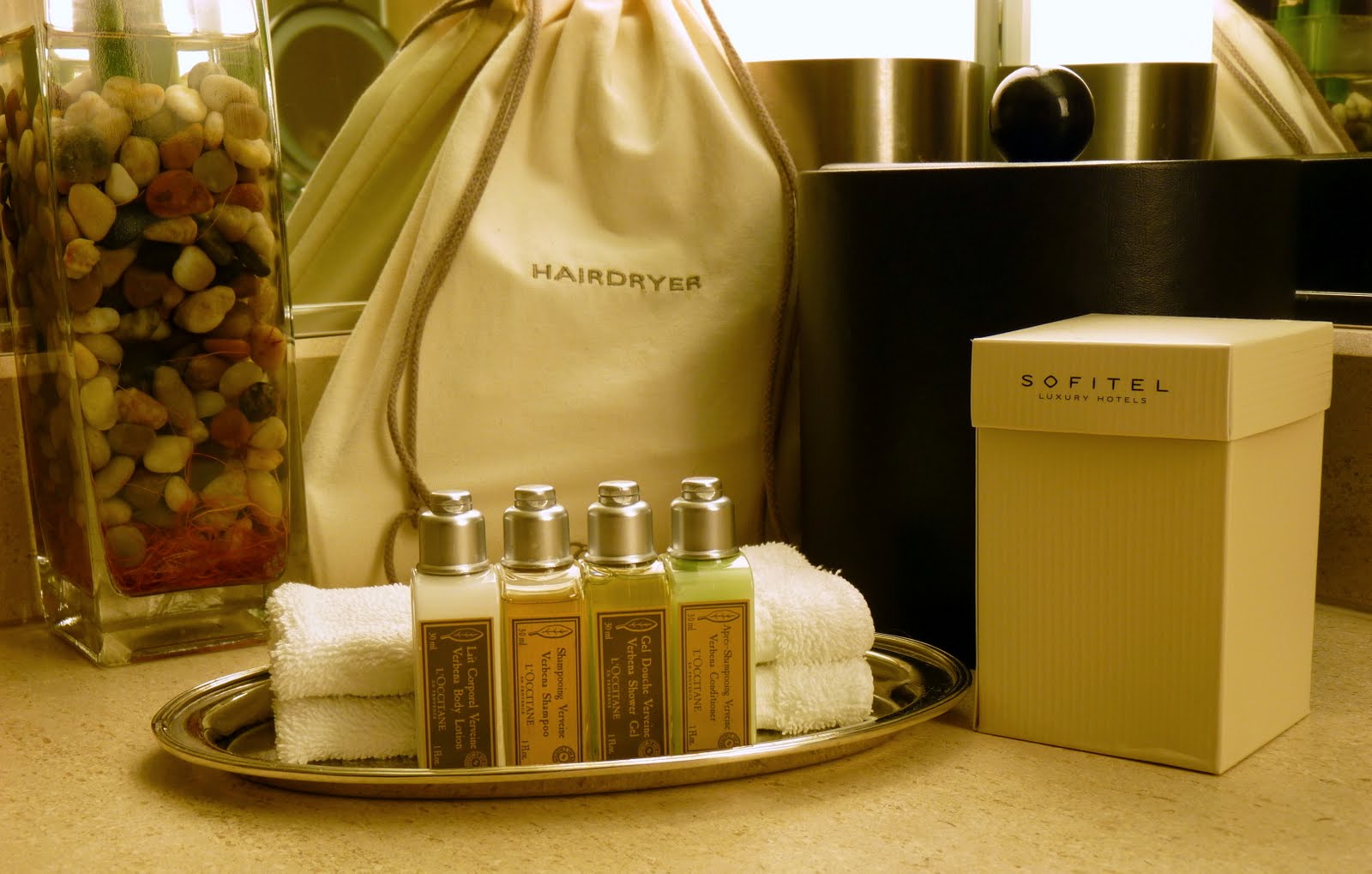
who designs bathrooms in expensive hotels?

You know the places I mean.  You spend $500 a night for a place to sleep.  You would think hotel designers would spend most of their time working out the best sleep formula for weary travelers.

Then you wander into the bathroom.  And it looks as if a Japanese artist with a good deal of taste and an advanced case of OCD was turned loose in there.

Little bottles of lotions are lined up like backup singers with a bevy of soloists -- the pleather ice bucket, the hair dryer in a canvas bag, the plant being tortured in near Arctic midnight conditions.

But those little bottles always catch my attention.  So tiny.  So artistic.  And so dysfunctional.

Nancy tells me that the unprofessional French-sounding brand of lotions I have been offered are very high quality.  I wouldn’t know.

The bottles look pretty.  But they are made of such hard plastic that it is possible to get only little one drop of shampoo out during a full shower cycle.  Physics is apparently a course not taught in designer school. 

Trying to squeeze thick honey through a pin hole simply does not work.  I found myself looking for the artfully-designed ballpeen hammer.

Here’s a suggestion.  Why not just have a big bottle of Head and Shoulders in the shower?  And just leave it there.  Like most people’s bathrooms.

And let the artists get back to designing women’s shoes. 

Sunday, February 05, 2012

too rich to be poor


I have always loved San Francisco.  It may be the most beautiful city in the world.

But, like many beauties, San Francisco’s assets get a bit skewed.  Almost like a monarch who is never thwarted.

And I am not talking about the low-lying fruit -- the city’s politics.  Where good intentions result in unintended consequences. 

Street people are a perfect example.  San Francisco wanted to show its compassion by repealing trespassing laws -- and ended up with streets that look as if touring companies of Les Miserables are stranded in town.

But that is too easy.  What fascinates me about San Francisco is the contradiction you will see at every corner.

And nothing could be more symbolic than the statue that stands in the courtyard of the old ferry terminal building.

That is Mohandas Karamchand Gandhi -- in the photograph at the top of this blog.  The very symbol of inner peace.  He is there because every liberal (and many conservative) Americans would like to believe their soul is one with his.

But Gandhi was also a proponent of self-sufficiency.  And there his statue stands in the midst of food crates and stalls overflowing with food that none of the buyers produced themselves.
 
And at prices that would make Bapu weep.  A pound of these beautiful greens cost more than a poor India family makes in a week.

But they are beautiful.  The city is beautiful.  We are beautiful.  And the day was beyond beautiful.  One of the nicest I have spent in San Francisco in years.

My friends, Nancy and Roy, drove me around town for an hour or two.  We then headed over to Sausalito to dine on clam chowder and mahi mahi tacos while watching the sun light up our bright Babylon by the sea. 

I often mention how nice it is to dine slowly in Mexico.  To get the rhythm of the culture.  And that is what we did today.  No rush.  Just eating in the sun and chatting about our lives and their part in this great world.


Driving back across the Golden Gate bridge, we decided to take a detour to the ocean beach on San Francisco’s western shore.  It has been a long time since I was there.  In fact, the last time I was there in the 1970s, I camped on that beach.

As some of you know, I like collecting photographs of signs.  Especially signs with odd communications.  This one falls into the blunt message category.


If it had been posted in Mexico, it would most likely have included a pictogram of a series of swimmers sinking immobile to their deep dooms.

But later this morning, we leave behind the particular beauty of this city and its contradictions to hunt for new signs in China.

See you on the other side.