Friday, February 16, 2018
shot down
Timing is everything.
My head is filled with clichés these days. And that is true because today my hands are not filled with a camera.
During the past couple of months, my Sony NEX6 has been giving me various troubles. There was an ever-growing lag between switching it on and the camera going operational. Then the electronic zoom on my workhorse lens started sticking. Then, not responding at all.
I managed to get through the Peru trip. But I noticed my pictographs were not up to my standards.
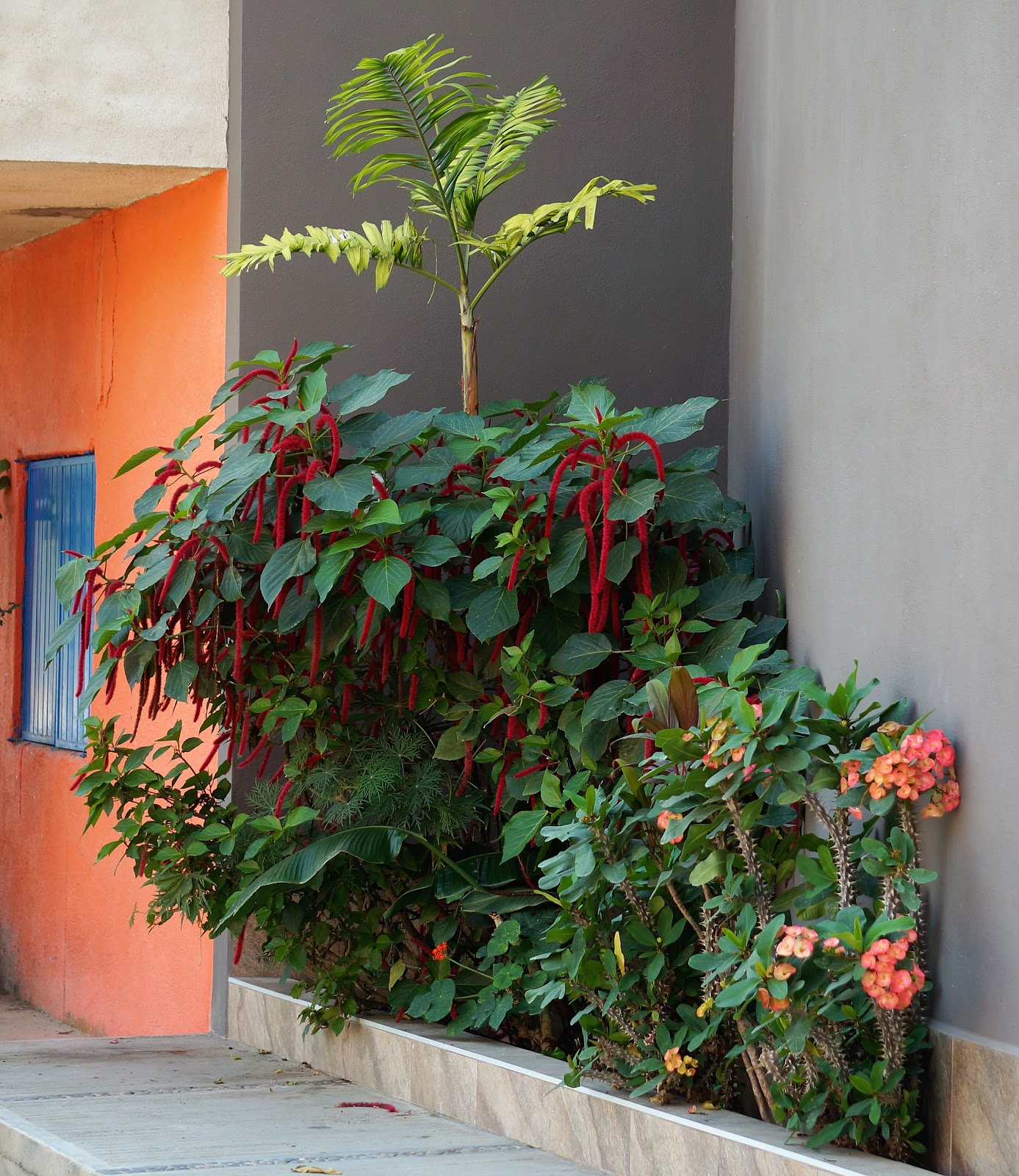
This week I have been preparing for my departure this morning to Guatemala. I took my camera out for an experimental shooting session -- the goat-trimmed landscaping in front of my house.
I turned the camera on. Nothing. Then I looked at the screen. The camera could not recognize my lens. I took it off and re-attached it. Nothing.
I cleaned the contacts. Nothing. I returned all of my settings to factory default. Nothing. When I attached my telescopic lens, the camera worked fine.
A little bit of research online quickly found the answer. My lens was dead. Apparently, it is not a rare event with this particular Sony lens. After all, this had been the tird lens of that variety I have purchased
I priced a replacement. Almost $500 with shipment. And the lens would not arrive until I returned from Guatemala.
Here is what I have decided to do. I will take the Sony with the telescopic lens attached to Guatemala. There are plenty of places where that lens should work well. Such as, Tikal.
For closer range shots, I will rely upon the camera in my telephone (or is that the telephone in my camera?) That combination should cover me for this trip. I will just have to take the quality hit.
That now leaves me calling on you dear readers if you have any suggestions for a new camera. Rather then buying a new lens, it is time to move on.
My friend Jordan is a professional camera man. He is working on some ideas for me.
But if any of you have any suggestions, I am all fingers. Anxious fingers.
I did mention Guatemala. If you are interested here are our stops. Antigua. Lake Atitlán. Tikal. With assorted stops here and there.
With my limited equipment, I will shoot what I can. But it sounds as if it is going to be another great trip with Mex-Eco Tours.
Thursday, February 15, 2018
dead dog certain
No good deed goes unpunished.
I could use all sorts of clichés for today's cautionary tale. But that one will do.
After a hiatus for my trip to Peru and a subsequent bout of illness that kept me in bed for a few days, I have started my regular walking routine.
While clipping along through the centro area of Barra de Navidad, I saw a bit of Sophoclean tragedy working out its way on the sidewalk in front of a hotel.
I do not know how many times I have walked past the same scene. An older Mexican man sitting at the edge of the sidewalk with his back to a medium-sized dog tied to a post.
What was different today was the older northern woman bent over the dog fiddling with his collar. In the few steps it took me to draw even with this developing drama, I saw she had stealthily taken the collar off of the dog.
The dog owner (at least, I assume he was the owner) turned to look at the dog at just that moment. A look of horror crossed his face as he grabbed for the dog. The woman pushed the dog away.
Not surprisingly, the dog bolted. That was why he was tied up. But he did not choose wisely. He ran between two parked cars into the street where he met the bumper and front tire of a car driving far too fast. Fortunately, it was not a motorcycle or the woman would now have the blood of two lives on her hands.
I had stopped at that point. The woman was hysterically crying. I could not understand what she was saying. It sounded like: "I was just trying to help." And she said something about "Ontario." As she started walking away, the dog owner grabbed her by the arm and pulled her back.
I did understand what he was saying. He wanted ten thousand pesos from her for the dog. The woman cried.
He forced her to sit down and called someone on his telephone. She cried.
I do not know how this little morality play ended. And it really does not matter. Because the moral was apparent the woman laid hands on the collar.
We learned it in kindergarten. Keep your hands to yourself. It is something the likes of Harvey Weinstein failed to learn. As did this woman.
There is another moral, as well. It is one I have had to learn over and over in Mexico. But it is imbued with the wisdom of my neighbors. The dog owner must have said it four or five times to the sobbing woman. "It is none of your business."
Often times, it is true. It certainly was today.
And a dog had to die to prove the point.
cart of laughs
While I was on my morning walk in Barra de Navidad centro, I ran into my Mexican friend Alan. He joined me for part of the walk.
As we came around a corner, he burst out laughing. When I asked him about this bout of spontaneous merriment, he said: "You missed it. It went by up there."
I thought that was it. But, when we turned the next corner, there it was. Parked in front of a convenience store.
Alan was laughing so hard, I thought he was going to collapse.
But this is one of those moments where I am going to leave the comments to you.
I will say this. If you can bring a sense of laughter into people's lives, good for you.
Tuesday, February 13, 2018
goat boy goes mild
But, as is often true with life, aesthetic perfection crashes on its first contact with reality.
In this case, it was not the first contact. It took at least 5 years. But the landscaping choice may not have been as perfect as it seemed when it was on paper.
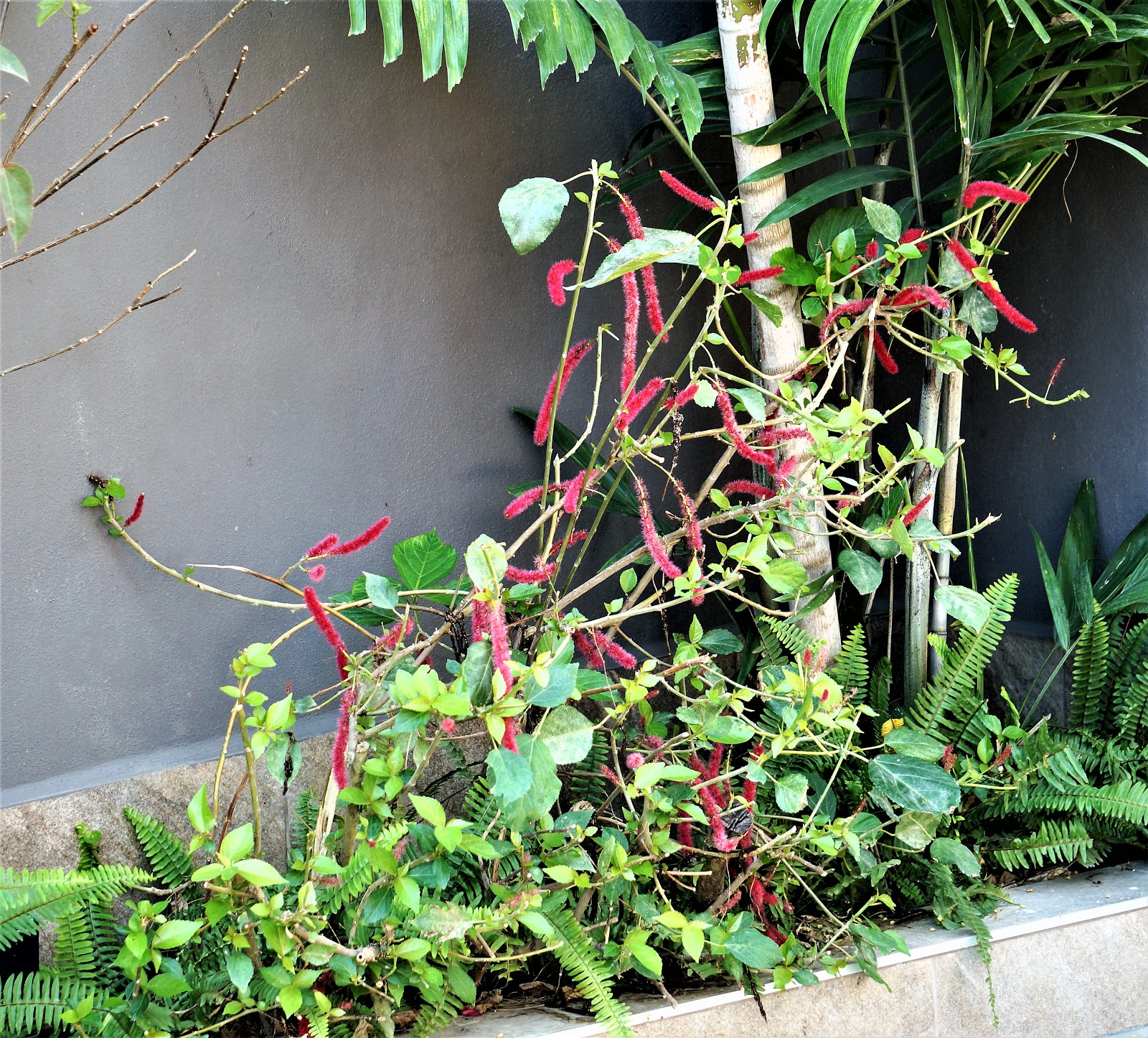
The plants out front, do not require much maintenance. An occasional whack here and there keeps everything under control. Without much urging, the plants crank out red flowers all year long.
When I returned from Peru, I noticed that the planters no longer seemed symmetrical. Where the lipstick plant (as I call it) once was in the western planter, there was now a gap. Not a complete gap. But a large hole had been gnawed in the orderly line.
My neighbor, Mary, solved the mystery for me.
One of the joys of our bucolic existence here is the occasional goat herd that wanders through the neighborhood in search of greener pastures. They regularly stop at the vacant lots across the street from my house.
Apparently, one of the rams decided that the plants were greener on my side of the street. When Mary saw him chewing one of her plants down to a nub, she chased him away. Apparently, the young man who usually tends the goats was too busy on his telephone working out how he could work in a wolf story on his blog.
Before she could play her Marie Antoinette role as shepherdess role, the ram had his way through what must be a very tasty lipstick plant -- at least, to a goat.
But it really does not matter. One of the advantages of living in the tropics is that plants rejuvenate quickly. The vines I cut down in the patio late last year are a perfect example. They are once again shading the bedrooms they front.
If i still lived up north, this tale would have included calls to one governmental authority or another. Here, there is no authority to call. What I get, instead, is essay fodder.
Rather than fume, I came inside, sat down by the pool with a cold glass of water, and spent a little time chatting with you good folks.
What could be better than that?
Monday, February 12, 2018
peru is more than inca
A reader stopped me at church on Sunday, and asked:"Isn't there anything to do in Peru other than to look at ruins?"
Several snarky replies passed through my mind. And that is exactly what I let them do. Pass right through.
The question is a good one. Peru is not simply the Inca empire. It is a modern republic doing its best to overcome a lot of its past and to be part of the modern world. It is also downright beautiful.
So, in the spirit of Allan Sherman's "Holiday for States," I will give you my other 14 reasons for flying south of the equator.
1. Coca welcomes you.
That is, Coca-Cola. This sign is the first bit of cultutre you see when arriving at the Lima airport.
Of course, there is also the other coca. And it is readily on offer in leaf form. The raw product that is eventually turned into cocaine to dust the noses of northerners who want to feed their inadequacies.
The leaves are not only legal in Peru, they are ubiquitous. For good reason. The Inca learned that chewing the leaves like tobacco will reduce the effect of altitude sickness. It can also be brewed into a tea.
I am told it also has a slight inebriating effect. My observations of our tour group affirm that.
There is also another cola in Peru. Inca Kola.
Do not let the full lab specimen look fool you. It does not taste as bad as it looks. The taste is similar to -- bubble gum. I thought it might be a local rival to Coca-Cola. It once was. No more. It is produced jointly by the former owners and Coca-Cola.
When we returned a week later to Lima, workmen were busy dealing with the Coke caps. Had this been a Monte Python skit, a cap would have been pried off, and the workmen would have been swept away in a flood of dark, sticky carbonation.
That may be an entirely different kind of movie.
2. The police are better looking than in Melaque.
I am not quite certain if it is the outfit -- or --. Nope, It's the outfit. A woman in jodhpurs is always stylish.
3. Being run out of town on a fashion rail.
On our return train trip from Machu Picchu, the three staff members in our rail car put on a fashion show. And not just any fashion show. All of the offerings were alpaca.
I have seen plenty of alpaca pieces in Peru. Most of them look as if they were designed for grandmothers. But not these. They were modern and versatile.
And it was the first time I have ever experienced a fast-moving fashion runway. (To a pilot, a moving runway is a rather unsettling concept.)
4. There is always a little bit of ethnic humor hanging around -- even if it is unintentional.
This one is for my British friends.
5. If you play that one more time, I am going to stuff that pan pipe down your throat.
Because we were on a tour, most of the restaurants where we dined must have thought we would abhor the sound of each other's conversation. To solve that, the air was soon filled with the sound of pan pipes, stringed instruments, and drums.
All went well until almost every band decided our northern ears would be offended by something original. So, we were assaulted with the Roger Whittaker songbook, "Guantanamera," "The Girl from Ipanema," and "My Way." Often more than once from the same band. The type of songs musicians play when they run out of good material with which to insult the taste of their audience.
The best bands -- and there were one or two -- played tunes unfamiliar to us -- often with dissonant chords that made them interesting. They were a pleasure to listen to.
But the best entertainment on our trip came in two quite different styles and places. Both were dance companies.
On our way out of Cusco, our assistant guide invited us to his family restaurant for breakfast. He promised a surprise. And a surprise it was. A local folk dance company made up exclusively of men and boys.
They entered to the wail of a saxophone, the thrump of a drum, and the crisp morning sound of cymbals. Exactly what should accompany a folk dance team.
The dance told an old story. How the people worshipped nature in the surrounding mountains until the lash of the Spanish arrived and taught the Indians that they needed to beat the sin out of one another.
It was a powerful program.
The only other entertainment that challenged it was on our last night in Lima. We had previously seen several folk dance companies of indifferent talent.
This group took the same material added costumes, lighting, modernized version of folk music, staging, and extremely talented dancers to produce a show unlike any we saw in Peru.
There were moments it was possible to believe Bob Fosse was channeling Pippin on a stage in Lima, Peru.
6. Little churches in villages await your sighs.
We did not stop at any churches. But I found this Virgin of Carmen on a litter awaiting her little walk around town in Pukara.
7. Where there is darkness, someone will light a solar panel.
We stopped at the highest point on our trip to Lake Titicaca, abra la raya. Even though, we were in the middle of nowhere, vendors had set up shop to nab any loose soles jingling in tourist pockets.
,
But what do you do when your telephone needs charging and your tape player needs power? You whip out your portable solar panel, of course. The ingenuity of the Inca survives.
8. You can meet a president even more unpopular than Peña Nieto.
His name is Pedro Pablo Kuczynski Godard.
Yes. Peru has a president with Polish ancestry. Not too long ago, they had a president of Japanese ancestry -- Alberto Fujimori.
Fujimori was convicted in 2007 of ordering an illegal search and seizure (one of the lesser charges he potentially faced). In 2009, he was convicted of human rights violations and sentenced to 25 years in prison.
His daughter, Keiko, twice ran for president and lost on the platform of being a loyal daughter who would spring her papa from the hoosegow. She is the leader of the largest party in Congress.
President Kuczynski was sworn in in June 2016. Ever since then, Congress has made his life miserable by forcing the resignation of cabinet members and a series of impeachment votes.
He barely survived the last vote on charges that he was involved in a bribery scheme out of Brazil that has touched most Latin American governments -- including Mexico's. The votes that made the difference in saving the president's bacon came from Keiko's brother's faction of her party. The brother, of course, is the son of Alberto Fujimori.
Three days after surviving the vote, President Kuczynski pardoned the former president. The president's approval rating has simply disappeared.
Our first afternoon in Cuzco, this political protest marched by our hotel. In Peru, to be called a rat is undoubtedly not meant as a compliment. But rat constitution, rat Fujimori, and rat Kuczynski strikes me as both redundant and rather dull.
Ah, well. If they are focused on their own president, maybe they will leave our president to us.
9. Something to bug you.
Yes. Yes. I know. It is an ant. Not a bug. But none of the mother's sister puns worked as well.
This beauty was on my wall at the hotel for our Machu Picchu stay. Just a reminder that it is a jungle out there. Literally.
As for its size, if you have to ask, you do not want to know.
10. Dying to sell you.
I know several of my readers are enthralled with textiles. To me, textiles are what keeps me from having to talk to the judge about that restraining order.
Those of you with a better eye for crafts would have loved one of our first stops in the Andes. It was a little "factory" where colorfully-garbed women purported to clean, comb. spin, dye, and weave sheep and alpaca wool into some extremely intricate designs -- all of them symbolizing something or other.
Watching the process was fun. But, like all of these places, these women did not truly weave there. That was done elsewhere.
This was a place to pass on a little lore to tourists while seducing them out of their credit cards. These were not pocket change pieces. That is why everyone who could not resist the sirens' allures had plastic in hand.
There is no debating the fact that the pieces were well-made. But none of them appealed to me. They seemed -- well -- old.
11. Aliens did it.
Any of you who were alive in the 1970s probably recall the eccentrically-rambling theories of Erich von Däniken. Chariot of the Gods and all that unscience gibberish.
Well there are plenty of his "intellectual" descendants who still believe that the little brown people of the world could not possibly have built the Egyptian pyramids or the monumental structures of the Inca empire. They had to have outside help.
And the most logical source of that help? Aliens, of course. Or were they simply undocumented workers?
Whatever. This is one of the art pieces the tin foil hat brigade relies on. They claim it is a man driving a space ship.
They, of course, are nuts. Any sane person can see that is Luke Skywalker and his speeder. Luke horns in on everything.
12. This will float your island.
I have been less than candid about the 12-year old inside me. Everything I said about loving the Inca is true. But there was something else that piqued that kid's interest.
Lake Titicaca. And I can still hear those sixth grade snickers.
It is, of course, the highest navigable lake in the world at 12,500 feet. That is higher than the highest mountain in Oregon. And navigate it, we did.
One of the tourist attractions on the lake is a visit to the "floating islands" of the Uros. No one knows where the Uros came from. But they probably migrated from the Amazon.
When they arrived, the other tribes would not let them have land. So, they built their own. In the lake.
That portion of the lake is filled with very buoyant reeds. They used the roots and soil as a foundation for the island. And then piled reeds on top of that to keep the island as dry as possible. And, just like a houseboat, they could up anchor and move the island away from any perceived danger.
It was a harsh lifestyle. When we visited, the "elder" told us how they now lived on the islands, sent their children to school, and survived by selling embroidery (made by the women) or mobiles (made by the men).
I must confess the place had a Disney feel. It looked authentic, but something did not quite seem to be as it was told.
Our guide told me what it was. What we were seeing was a show. The way things used to be. Like the re-enactors at Williamsburg. In truth, once the tourists are gone, the families pile in their moto boats and return to their homes on the lake shore.
That did not bother me. Real or re-enactment, people actually lived and thrived on the resources of the lake.
But, we had to say farewell to the Uros because we had another lake adventure. We boated for two hours until we reached the island of Taquile in the main body of the lake where we had lunch and went on a steep hike around the island. About an hour trek. And at 12,500 feet, it was a strenuous walk.
Strenuous, but beautiful. There was no other noise than the birdsong. The day was sunny. The shade was seductive. And a little voice kept nagging at me. "You have been here before."
Of course, I hadn't. And then I realized what it was. Everything (with the exception of the altitude) was something I had experienced before. When I lived in Greece. On the Adriatic islands. I almost wanted to sit down and soak it all back in.
But there was a boat to catch for the two hour sail back to Puno.
13. Keep your Mary's face on a tortilla; I saw Jesus in a tree.
It sounds like a reversal of Zacchaeus story. But there he was. Right outside the National Museum of Archaeology, Anthropology, and History in Lima.
'Nuff said.
14. And then you get to go to Mexico City where sweeping everything together is just like ending this series on Peru.
I am not a bottom line guy. But, if I were, I would tell you that a trip to Peru is well worth the effort. You don't have to have a chest of Inca dreams.
Just go to enjoy yourself. But go.
Sunday, February 11, 2018
running with the big dog
And then someone stomped on the accelerator. That someone was Pachakuti.
What for centuries had been a minor clan in the highlands of the Andes transformed themselves almost overnight into the world's largest empire of the late 15th and early 16th centuries.
The spark was simple. An act of aggression. In 1538, the Chanka attacked the Inca at Cusco, fully expecting they would rout the insignificant Inca.
There was a rout. But it was the Chanka who left with a bloodied nose. The Inca defense was led by the youngest son, Pachakuti, of The Inka. Once he got a taste for power, Pachakuti would go on to depose his father and elder brothers, to name himself as The Inka, and, for good measure, to declare himself a descendant of the sun.
Nor did he did stop there. A descendant of the sun could not be confined to the ways of small-town Cusco. During his thirty-four year reign as The Inka, he absorbed the territory of his neighbors through cajolery ("Ya got yaself a pretty nice country here. Too bad if sumpin bad should happen to it.") and, when that failed, warfare.
Pachakuti also decided his new empire needed a new look. Something that showed the power and grandeur that was rattling around his head. So, he started building. And the result is still there in Peru. Evidence of the short-lived golden age of the Inca.
Darwin, our guide, wisely started our Inca tour with what, I thought at the time, was a rather eccentric choice. I anticipated we would start with one of the mega-sites.
Instead, we simply sauntered across the street from our hotel in Cusco. I had already seen where we were heading. (That is it at the top of this essay.)
It would be hard to miss. The structure is huge. But I thought it was nothing more than a 16th century Spanish convent. I should have known better. The Catholic church in Latin America is infamous for tearing down other people's sacred places and building a churches on top of them. Cholula is the granddaddy of this technique.
If you take a close look at the bottom of the complex, you can see there are two quite different architectural styles. The platform's provenance is Inca. The large blocks of stone give it away.
This was the most sacred of all Inca temples -- Qorikancha. The temple of the sun.
Before the Spanish arrived, the temple was the center of Inca worship., After all, Pachakuti was a direct descendant of the sun. Its worship reflected his own power and glory.
When the Spanish built the convent and stopped the sun worship at this site, they did something quite unusual. Rather than destroying the sun temple buildings, they built the convent around it, leaving the remnants of the temple rooms in place.
The temple buildings are dwarfed by the convent, but it is possible to get a sense of the scale of the place through a diorama -- before the convent squatted around the Inca buildings. That is The Inka himself (the yellow fellow)coming to celebrate his ancestor, the sun.
The complex consisted of five buildings built of plain dressed stone -- temple of the sun, temple of the moon, temple of Venus and the stars (which would not be a bad name for the ubiquitous pan pipe bands in tourist restaurants), temple of Chuki Illapi, and the rainbow temple. The walls of the temples are so smooth, the joints are so tight, it appears to be a modern reconstruction. It isn't. It is the real McCoy. (Or McInca. Complete with golden arches.)
The interior walls of the complex were covered with plates of gold, and the niches in the rooms were filled with gold and silver statues. The windows were placed to capture the light from the sun that would then be reflected off of a large block of gold that projected light on each of the gold and silver objects in the room. It must have been quite a sight.
It was in the midst of this opulence that Pachakuti seated the mummies of his Inka predecessors to seek their guidance. Not even a screenwriter could have imagined such a setting.
Stretching in front of the temple is a large expanse of lawn, the solar garden, which was once the place where subjects of the empire could offer gifts of plants and animals sculpted in precious metals. Of course, for most of them, they were offering gifts to a deity of whom they knew next to nothing. But it was the empire. And attention must be paid.
I am glad we started our tour there. Of all the sites, it was not the most majestic. It would have been had all of the gold remained in place rather than being stripped to ransom The Inka, Atawallpa, from the Spanish.
Even stripped of ornamentation, the place still has meaning. This was the center of the empire. The place where the four regions joined. Where the subjects of the empire could worship their Inka through his ancestor the sun. It tells a lot of who the Inca were.
But Pachakuti was not just a Lady Bird Johnson -- satisfied with gussying up Cusco. He had an empire to build. And he need to fill the place architecture that conveyed strength.
Everyone who goes to Peru wants to see Machu Picchu. Well, almost everyone. I am not a fan of mega-sites. But I was still looking forward to seeing the place.
So, off we went by bus -- and train -- and bus again on our pilgrimage to Peru's best-known tourist attraction.
But, we encountered an impressive sight along the way. Ollantaytambo.
If Pachakuti was going to have an empire that expanded across the breadth of the Andes, he needed a bureaucratic system to help it operate. I mentioned earlier the 25,000 miles of roads that would eventually be built. Not all of them existed in Pachakuti's time. But a lot did. He ordered them built.
The roads tied the empire together. Armies could be moved quickly on them. Imperial runners could quickly carry royal decrees to The Inka's subjects. And, just importantly, necessities could be distributed from one part of the empire to another. Remember. This empire was not built in Kansas. Its topography ranged from sea level to heights well over 14,000 feet.
Ollantaytambo was a way station to facilitate all of those operations. For Pachakuti, it was a royal estate with a ceremonial center. He lived here and provided housing for that portion of the aristocracy who were wise enough to grab the tail of his rising star. The aristocrats who had favored his father or one of his other brothers had accommodations not quite as luxurious as those at Ollantaytambo.
Think of it as an Inca Bohemian Grove. Or, for the more conspiratorial-minded amongst you, Château de Ferrières. You can feel the sybarism in the air.
The terraces leading up to the temple area could easily be mistaken for a fortress. They aren't. (Even though Manco Inca initially chose the place as one of the last stands against the invading Spanish. Realizing it was a lousy fortress, he withdrew to Vilcabamba, where the Inca would finally fall to Spain in 1572.)
What makes it look like a fortress is all of that stone. To Pachakuti, the stone was designed to show the power of his new state. Massive. Strong. In league with the elements and the deities.
But, Ollantaytambo also served as part of the empire's warehouse system. The warehouses can still be seen on a mountain facing the temple mountain.
The site was chosen for its altitude and the warehouses were placed in the gap between the mountains to catch the wind and act as a natural refrigerator -- or freezer. The warehouses are those tan patches with the vertical lines. (Click on the image to enlarge it.)
While you are clicking, take a look at what appears to be a carved face between the warehouses. And that is exactly what it is. The face of Wiracocha -- the creator god. You might remember him from his cameo appearance in walking with the inka. Giving the impression that Michelangelo may have stopped by and used the carving as a study for The Creation of Adam.
But Ollantaytambo is just a way station on our ultimate goal -- Machu Picchu.
No one is exactly certain why Machu Picchu even exists. It is located on a very high mountain ridge at 8000 feet. Surrounded by other high mountains. Even with Inca skills, the place was isolated.
In one sense, that was fine. It was never designed to be a population center. It was another of Pachakuti's private reserves. Only for him and his aristocratic buddies.
No more than 500 to 750 people lived there. It would have been a little bit like Jack Kennedy building Jackson Hole and then restricting its use to the Kennedy clan and hangers on.
Pachakuti never saw it finished. He died before it was completed. Well, that is not entirely accurate because the city was never completed. Construction stopped when Pizarro and his gang took up residence in Peru.
The Spanish never found it. Probably because it was never used as a resistance center against them. The Inca simply walked away from the place -- or died of smallpox (another type of Spanish invasion). But, people who continued to live around the mountain for the next centuries knew it was there.
Its existence was not revealed to the outside world until Hiram Bingham, in 1911, claimed to discover the "Lost City of the Incas" (in that European sense that if someone of European descent did not know it was there, it was as good as a tree falling in a forest in the Congo). Ever since, it has been one of places to visit for the bucket-obsessed. Like the pyramid of Cheops. Or the glimpse of an American balanced budget.
Dates are hard to fix with Inca construction. But archaeologists believe most of the construction at Machu Picchu was between 1438 and 1472. That means that Pachakuti began construction the year he became The Inka.
But, why there? Why choose a place so remote that it was easy for it to slip into obscurity when the empire fell?
Darwin, our guide, has a theory. And it is a theory supported by some anthropologists.
In creating his empire, Pachakuti had to use every tool at his disposal. He knew he could not defeat all of his enemies through war. And he knew he needed a way to keep the people he had pulled into the empire from pulling out again.
What better way to do it than to show his power by building a magnificent palace complex where none had been built before and that no one could imagine a mortal man building? Such a man must be revered. And feared. He is The Inka. The descendant of the sun.
Whether that is true or not, it probably does not matter. But it certainly fits the mold of Pachakuti's other projects. Nothing half way for him.
What we see today is not what Hiram Bingham saw. He discovered construction that had been abandoned to the jungle for almost 400 years. The amazing part of the story, though, is how much of it had survived. How the Inca had built the place to last. That alone is a tribute to Pachakuti.
Like most Inca settlements on steep terrain, farming could be performed only on terraced land. That presented a problem at Machu Picchu. The soil is very unstable and prone to landslides that can wipe out years of terrace work. But the site was blessed with plenty of rainfall negating the need for irrigation.
These terraces were still being farmed by the Quecha when Bingham popped out of the jungle in the early 1900s. More proof that Pachakuti built monuments to himself reflecting his belief that he would live forever.
Certainly, these monuments to Pachakuti's empire have withstood the ravages of time far better than his mortal body.
I received the full frontal Inca experience while I was in Peru. Every site, every story, still excited that 12-year old boy who lives deep below the folds of five additional decades.
But, we are not yet done. History did not stop in Peru with the fall of the Inca empire. Or even the fall of the Spanish empire.
Peru is a thriving republic worth visiting for its contemporary offerings. We will take a look at some of those in the next essay.
But Ollantaytambo is just a way station on our ultimate goal -- Machu Picchu.
No one is exactly certain why Machu Picchu even exists. It is located on a very high mountain ridge at 8000 feet. Surrounded by other high mountains. Even with Inca skills, the place was isolated.
In one sense, that was fine. It was never designed to be a population center. It was another of Pachakuti's private reserves. Only for him and his aristocratic buddies.
No more than 500 to 750 people lived there. It would have been a little bit like Jack Kennedy building Jackson Hole and then restricting its use to the Kennedy clan and hangers on.
Pachakuti never saw it finished. He died before it was completed. Well, that is not entirely accurate because the city was never completed. Construction stopped when Pizarro and his gang took up residence in Peru.
The Spanish never found it. Probably because it was never used as a resistance center against them. The Inca simply walked away from the place -- or died of smallpox (another type of Spanish invasion). But, people who continued to live around the mountain for the next centuries knew it was there.
Its existence was not revealed to the outside world until Hiram Bingham, in 1911, claimed to discover the "Lost City of the Incas" (in that European sense that if someone of European descent did not know it was there, it was as good as a tree falling in a forest in the Congo). Ever since, it has been one of places to visit for the bucket-obsessed. Like the pyramid of Cheops. Or the glimpse of an American balanced budget.
Dates are hard to fix with Inca construction. But archaeologists believe most of the construction at Machu Picchu was between 1438 and 1472. That means that Pachakuti began construction the year he became The Inka.
But, why there? Why choose a place so remote that it was easy for it to slip into obscurity when the empire fell?
Darwin, our guide, has a theory. And it is a theory supported by some anthropologists.
In creating his empire, Pachakuti had to use every tool at his disposal. He knew he could not defeat all of his enemies through war. And he knew he needed a way to keep the people he had pulled into the empire from pulling out again.
What better way to do it than to show his power by building a magnificent palace complex where none had been built before and that no one could imagine a mortal man building? Such a man must be revered. And feared. He is The Inka. The descendant of the sun.
Whether that is true or not, it probably does not matter. But it certainly fits the mold of Pachakuti's other projects. Nothing half way for him.
What we see today is not what Hiram Bingham saw. He discovered construction that had been abandoned to the jungle for almost 400 years. The amazing part of the story, though, is how much of it had survived. How the Inca had built the place to last. That alone is a tribute to Pachakuti.
Like most Inca settlements on steep terrain, farming could be performed only on terraced land. That presented a problem at Machu Picchu. The soil is very unstable and prone to landslides that can wipe out years of terrace work. But the site was blessed with plenty of rainfall negating the need for irrigation.
These terraces were still being farmed by the Quecha when Bingham popped out of the jungle in the early 1900s. More proof that Pachakuti built monuments to himself reflecting his belief that he would live forever.
Certainly, these monuments to Pachakuti's empire have withstood the ravages of time far better than his mortal body.
I received the full frontal Inca experience while I was in Peru. Every site, every story, still excited that 12-year old boy who lives deep below the folds of five additional decades.
But, we are not yet done. History did not stop in Peru with the fall of the Inca empire. Or even the fall of the Spanish empire.
Peru is a thriving republic worth visiting for its contemporary offerings. We will take a look at some of those in the next essay.
Saturday, February 10, 2018
walking with the inka
The reason I came to Peru was to experience the Inca empire. From what I have written so far, you might get the impression that I consider the Inca to be a mere footnote in the history of Peru. After all, the empire existed less than a hundred years.
But, it was its rapid rise to greatness that makes it so impressive. Growing from an inconsequential clan in Cuzco, in that brief century, the Inca created the world's greatest empire of the late 1400s and early 1500s. When the Spanish arrived, it had recently reached the height of its power.
You already know the history of its creation (setting the stage). It is now time to put some meat on those bones. History is one thing. Actually seeing what the Inca wrought is another.
As I mentioned earlier, the Inca left no written language. At least, we do not think they did. There is the possibility the the knotted cord quipos are a three-dimensional writing system. If that code is ever broken, we may learn a lot about the daily life of the Inca.
What we do know about the Inca is in stone. Literally. When The Inka who founded the empire, Pachakuti, envisioned what his new world would look like, he saw cities built of monumental stone. From that point on, a new architectural style was born. Cities. Temples. Palaces. Dressed stone for temples. Rustic stones for walls and citadels. But always stone.
Had he not made that decision, we would not now know much about these industrious people. But they did, and we do.
The Inca were not the first people of the Andes to build with stone. High on a hill on the edge of Cuzco stands what looks like a stone fortress. Saqsayhuaman. Its zigzag structure looks as if it has been part of the hill forever.
It has. Well, not forever. But before the Inca arrived in Cuzco. An earlier civilization, the Killke, built a stone structure on the site. We do not know its purpose. Whether it was a fortress or a temple or a residence. There is no way to tell.
What we do know is that Saqsayhuaman was part of the area of Cuzco where the small clan of Inca settled. At some point, they began improving it.
Improving is an understatement. The Inca somehow transported, without the aid of the wheel or draft animals, immense stones to the site. Stones weighing 60 to 80 tons. And then laid them in a pattern creating a zig-zag wall. Three walls. One upon the other.
The Inca did not decorate their buildings with paintings. Other than gold (which we will discuss later, and which was not used here, as far as we know), the only decorations were the manner in which the stones were laid or when abstract designs were chiseled into the stone. The type of austere beauty that has inspired modern artists.
Saqsayhuaman was not a fortress. Even though it looks like one with its bastion walls high on a hill. The fact that the Inca chose the place as their last defense of Cuzco against the Spanish led the Spanish to believe it was a fort. That misinterpretation became part of the Spanish narrative.
The most accepted theory is that the site was ceremonial. Behind the walls, there are foundations for two buildings. Most likely, temples.
There is a large, flat area in front of the walls. It would be perfect for public ceremonies that did not require entering the sanctuary area.
If a visitor stands facing the walls on the open plain and then turns around, there is a rocky hill. A number of Inca sacred sites are near similar formations. Some anthropologists believe the temples were simply the tools of worship. It is the hill that is sacred. Of course, without a history we can read, it is all speculation.
What we do know is that the temple structure affords a panoramic view of the Cuzco valley. If it was not a fortress, it certainly could have been used as one.
Saqsayhuaman predates the rise of the empire. But much of the stonework was undoubtedly added after Pachakuti became The first great Inka. The use of monumental stone reflects his taste.
There is another pre-Pachakuti site on a hill near Saqsayhuaman -- Q'engo. It has the feel of ancient paganism. Supple stone on a grand scale. Secretive cracks. And a carved cave.
And we know a lot about this ancient place. Before there was an empire, the Inca carved out the cave as a place for sacrifice. But, more importantly, it was the place where they mummified the remains of their leaders. On this carved stone table.
Pachakuti declared he and his descendants were descended from the sun. Putting him on the same divine footing as the emperor of Japan.
But, even before that self-declared divinity, the Inca mummified their leaders. And, because they had a divine spark, on special occasions, the mummified Inkas were taken out of ceremonial storage, dressed in their Inka finery, and paraded through the streets of Cuzco, where they would then be assembled on thrones to be consulted through women mediums.
This is the spot where the process began. The bodies of the Inkas and their wives had their organs removed. They were then embalmed. And freeze-dried -- a natural process on anything left out in the frigid air of the Andes. Several of my fellow travelers felt as if they had been through the process on our nightly walks.
We know that process because the Inka mummies were still in residence when the Spanish dropped in for their rather intrusive visit. Because it all looked like idolatry to the Spanish Catholics, the bodies were removed to Lima where they rotted in the humidity.
Let me tell you about one more pre-Pachakuti site. Raqchi combines two of the Inca's central cultural tenets. Trade and religion.
Archaeologists are not certain, but it appears the site was initially for religious ceremonies. Visitors are struck by one edifice when they arrive. A long stone wall that looks very Inca topped by a two-story adobe wall that looks oddly Spanish. It was simply the building method in vogue at the time of construction.
It is the remains of the temple of Wiracocha -- the creator god. The Spanish destroyed the majority of the temple and used the stones to build a humble church in the town plaza.
But reconstruction gives us an idea how massive the temple was. It is one of the few religious sites where the rituals are apparent. Visitors enter from one side and progress to the other. To do so, they need to zig zag to avoid building obstructions to continue their journey. (The drawing is held by our well-informed and energetic guide, Darwin Huanca.)
That zigzag pattern recurs in Inca architecture. We saw it in the walls of Saqsayhuaman. To the Inca, it represents the path we must take to find God.
But the site is also where it is because it facilitated trade. There are rows of warehouses that remind visitors of self-storage units. They are not. The warehouses are an integral part of the imperial system.
They served two purposes. The first is logistical. The empire was vast enough to produce a variety of foodstuffs and necessities. But fish from the coast needed to be distributed to the highlands. Corn from the plains and alpaca meat from the Andes required the reverse treatment.
At various points in the empire, these warehouses were built as central distribution points. Think of it as an imperial Amazon (if that is not redundant).
They also served as sites to store necessities for lean times. The Inca were the first civilization to free its population from famine. These warehouses were instrumental in that.
Warehouses mean traders. Along with the soldiers assigned to the site, traders stayed for short periods on their journey.
Even though Raqchi technically was not a city, it was a functioning cultural center. With a religious heart guarded by warriors and served by the commercial interests of their time.
So, there you have it. What the empire looked before Pachakuti the Great came on the scene. And when he did, things changed.
A lot.
Subscribe to:
Posts (Atom)